How to Choose the Best Thermal Transfer Paper?
Choosing the best Thermal Transfer Paper is not simply a matter of selecting the lowest price. The right sheet must match your printer, ink type, fabric, press temperature, and finishing requirements. A paper designed for laser toner may fail with an inkjet printer. A product made for cotton can produce weak results on polyester. Small mismatches create large problems.
David Gross, a respected sublimation and transfer-printing educator, explains, “Transfer paper is part of the printing system, not merely a disposable carrier.” That principle matters during real production. Watch how the paper releases the image after pressing. Check whether edges remain sharp or appear slightly fuzzy. Examine the fabric after washing, not only immediately after application. Touch the surface. Some transfers feel soft and flexible, while others leave a thick plastic layer.
The best Thermal Transfer Paper should deliver dependable color, clean detail, and suitable durability for its intended use. Still, no paper performs perfectly in every situation. That is where many buying guides become too confident. Test before ordering in bulk. Use the same printer settings, press pressure, temperature, and dwell time planned for production. Record the results. A low-cost sample may save an expensive reprint.
Consider paper weight, drying time, cutting behavior, peel method, and compatibility with light or dark garments. Also review technical data and supplier support. A reliable manufacturer should explain limitations clearly. That honesty is useful. The ideal choice is not universal; it is the paper that consistently fits your complete transfer process.
Understanding Thermal Transfer Paper and Its Applications
Understanding Thermal Transfer Paper and Its Applications
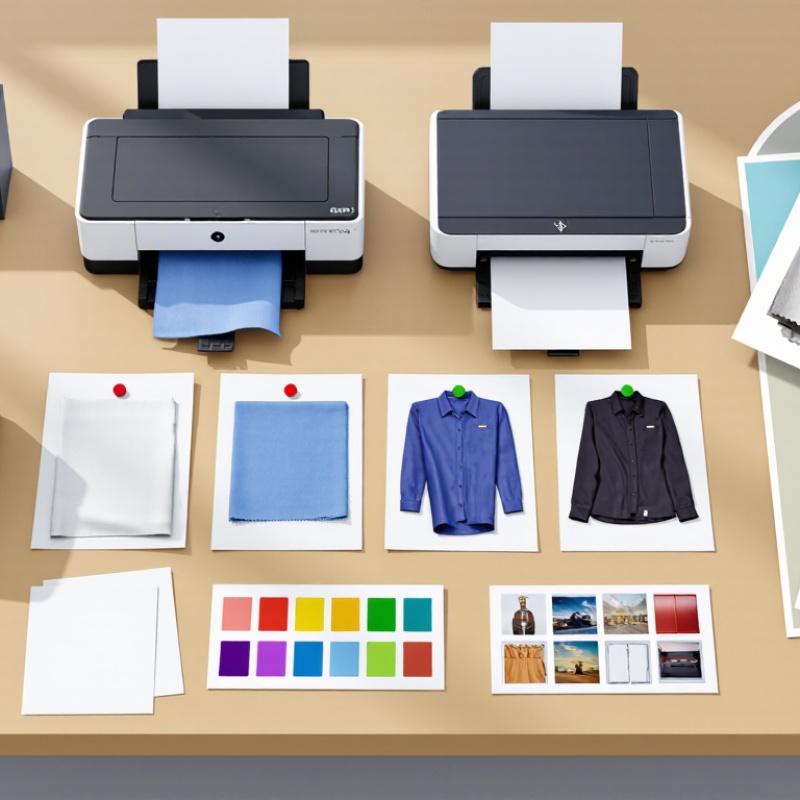
Thermal transfer paper carries printed images onto fabric through controlled heat and pressure. It is used for uniforms, event shirts, small-batch merchandise, labels, and personalized home textiles. The correct paper depends on fabric color, fiber content, printer type, and washing conditions. Light-fabric paper usually supports transparent backgrounds, while dark-fabric paper often requires a white backing layer. That layer can feel slightly heavier.
Market demand supports this flexibility. Grand View Research valued the global custom T-shirt printing market at approximately USD 4.31 billion in 2023. Its report also forecasts continued growth through 2030, driven by personalization and short production runs. Smithers’ textile-printing outlook similarly identifies digital customization as a major industry trend. These figures do not measure transfer paper alone, but they show why application knowledge matters.
A practical selection process starts with a fabric test. Check the transfer after pressing, cooling, stretching, and several wash cycles. Follow the paper’s temperature and pressure guidance closely. Do not guess.
For polyester, choose a compatible low-temperature option to reduce dye migration. For cotton, prioritize strong adhesion and a soft hand feel. A smooth cut edge matters on fine lettering. I still test three samples before production, because identical settings can behave differently across fabrics. Results may vary. ISO 6330 laundering methods can help structure durability checks, although home washing remains less controlled. The cheapest paper is not always the most reliable choice.
Identifying the Fabric, Surface, and Printer Compatibility
How to Choose the Best Thermal Transfer Paper?
Fabric identification controls the first decision. Cotton needs a coating that bonds with absorbent fibers, while polyester requires low-temperature transfer technology. Blended fabrics are less predictable. Test the exact fabric.
Smithers’ Future of Digital Textile Printing to 2028 forecasts double-digit annual growth for digital textile printing. That growth increases demand for reliable transfer workflows. Yet printer compatibility remains easy to overlook. Check whether the paper supports pigment, dye-sublimation, solvent, or aqueous ink. These ink systems are not interchangeable. A desktop printer may also require mirrored artwork and a specific paper-side setting.
Surface texture changes everything. Smooth, coated ceramics usually accept transfers differently from unfinished wood or painted metal. For garments, follow the paper supplier’s temperature, pressure, and pressing-time range. Then test a small area. Wash testing under AATCC TM61 can reveal fading, cracking, or edge lifting after repeated laundering. ISO 105-C06 is another useful reference for colorfastness evaluation.
Small details matter. I would record peel timing, fabric weight, and printer settings for every trial. That record makes failures easier to diagnose. Still, one test is not enough. Some transfers look excellent immediately but develop a stiff hand or tiny wrinkles after washing. My earlier assumption was that higher heat improved adhesion; testing showed that excessive heat sometimes damaged synthetic fibers. Reliable selection depends on measured results, not attractive samples alone.
Comparing Paper Types, Finish, Durability, and Transfer Quality
Choosing thermal transfer paper starts with the fabric, not the printer.
Light garments usually suit transparent transfer paper, while dark fabrics require an opaque white backing. Matte finishes reduce glare and often feel softer. Glossy finishes create stronger color impact, but they can look heavy on cotton. Always confirm ink compatibility. Inkjet and laser papers use different coatings and transfer temperatures.
Durability needs measurable testing.
AATCC TM61 uses a 45-minute accelerated laundering procedure to compare color and surface changes. ISO 105-C06 provides another recognized method for domestic washing tests. In practical trials, inspect the print after five, ten, and twenty washes. Check edge lifting, cracking, fading, and fabric stiffness. Smithers’ digital textile printing analysis highlights the industry’s shift toward shorter runs and on-demand production. That trend makes consistent paper performance more important, even for small orders. My own testing experience suggests that heat alone is not enough. Pressure, peel timing, and fabric moisture can change the result. This is where product instructions sometimes feel incomplete.
Tips:
Print a small test square first. Use the target fabric, not a substitute. Record temperature, pressure, and pressing time. Compare matte and glossy samples under normal room lighting. A slightly duller transfer may survive washing better. That trade-off deserves attention.
Selecting the Best Paper for Your Project, Budget, and Expected Results
Choosing thermal transfer paper starts with the project, not the lowest price. For cotton shirts, choose paper designed for flexible fabric and strong adhesion. For polyester, use a low-temperature option to reduce dye migration. Paper finish also matters. Matte surfaces hide minor glare, while glossy sheets can sharpen bright artwork. I test one small transfer first. It takes minutes. That step often prevents wasted garments.
Budget decisions should include ink, cutting time, failed transfers, and pressing energy. A cheaper pack may produce more peeling, cracking, or uneven edges. Mordor Intelligence’s 2024 digital textile printing analysis estimates the market could grow from about USD 3.15 billion in 2024 to USD 5.37 billion by 2029. This growth reflects demand for short runs and customized products, where reliable transfer performance matters. However, market growth does not make every paper suitable.
Expected results depend on washing durability, hand feel, color accuracy, and production speed. Follow the paper’s temperature and pressure guidance, then wash-test the finished item after 24 hours. I usually compare three samples: one washed normally, one turned inside out, and one dried with heat. My results are not always perfect. Humidity, fabric coating, and printer settings can change the outcome. Independent testing from organizations such as AATCC supports standardized textile colorfastness methods, but home tests still reveal practical problems. Choose the paper that fits your fabric, artwork, order size, and acceptable failure rate.
How to Choose the Best Thermal Transfer Paper?
Selecting the best paper for your project, budget, and expected results
This comparison uses typical planning scores from 1 to 5 based on common transfer-paper characteristics.
Light-fabric paper is usually the most budget-friendly option, while dark-fabric paper provides stronger
opacity and color coverage. Laser transfer paper commonly offers good wash durability, but it may require
more specialized equipment. Always test a sample because fabric type, printer settings, pressing temperature,
pressure, and washing conditions can affect the final result.




 Phone
 Send Email