Best Thermal Printing Labels for Efficient Labeling Solutions?
In the fast-paced world of logistics and retail, choosing the right labeling solutions is crucial. Thermal Printing Labels stand out for their efficiency and reliability. Renowned industry expert, Dr. Emily Cartwright, once noted, "Quality labels streamline operations and enhance customer trust." This insight underscores the importance of selecting the best labels for numerous applications.
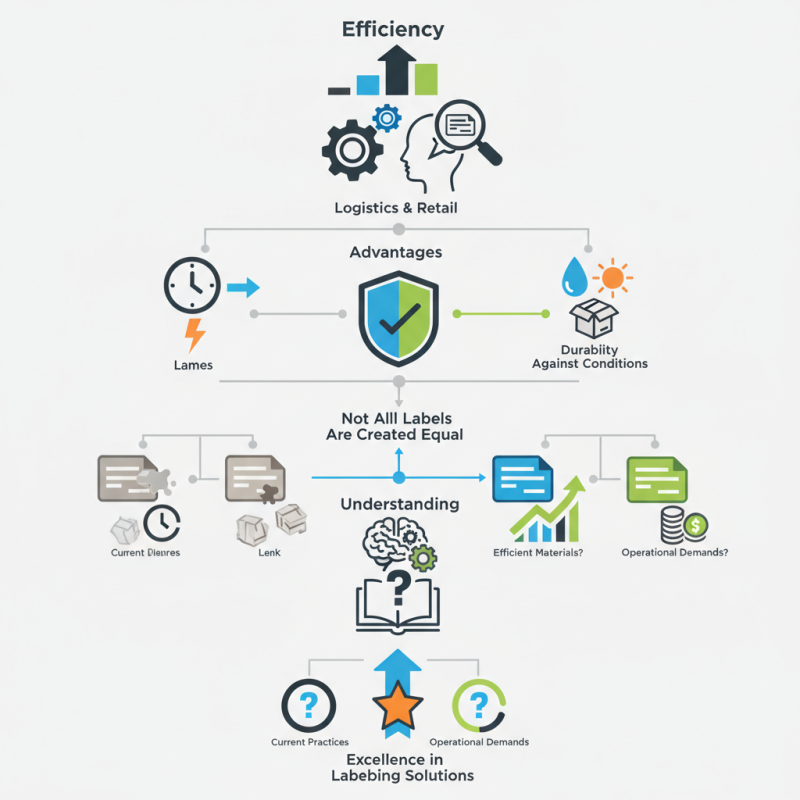
Thermal Printing Labels offer distinct advantages. They are quick to produce and durable against various conditions. In busy environments, the right labels can significantly reduce errors. However, not all labels are created equal. Some may fade or smudge under pressure. Selecting subpar options can lead to costly mistakes and wasted resources.
Investing time in understanding Thermal Printing Labels complicates but enriches the decision-making process. A reflection on your current labeling practices can reveal gaps. Are you using the most efficient materials? Do your labels meet your operational demands? Identifying the right labels may seem daunting, yet it is essential for achieving excellence in labeling solutions.
Types of Thermal Printing Labels for Various Applications
Thermal printing labels present versatile solutions for various labeling needs across industries. These labels are categorized mainly into direct thermal and thermal transfer types. Direct thermal labels utilize a heat-sensitive material that darkens when exposed to a thermal print head. This type is ideal for short-term use, such as shipping labels and receipts. In fact, a report by Smithers states that the thermal printing market is expected to grow at a CAGR of 4.6% from 2020 to 2025, highlighting the growing demand for efficient labeling solutions.
On the other hand, thermal transfer labels are printed using a ribbon that transfers ink onto the label material. These labels often have enhanced durability, making them suitable for longer-lasting applications, like product labeling in warehouses. Research indicates that about 70% of labeling requirements in manufacturing prefer thermal transfer labels due to their resistance to fading and environmental wear.
Tips for choosing the right labels include evaluating the intended use. Consider durability and exposure conditions. For example, if labels will be subjected to moisture or sunlight, opt for thermal transfer to ensure longevity. Ensure label compatibility with your printers to avoid printing errors and material waste. Sometimes, experimenting with different types can lead to surprising results and improvements. Always reflect on past labeling experiences to make informed decisions.
Best Thermal Printing Labels for Efficient Labeling Solutions
Key Features to Consider When Choosing Thermal Printing Labels
Choosing the right thermal printing labels can significantly enhance your labeling efficiency. Start by assessing the label material. Popular choices include paper and synthetic options. Each material serves different purposes. For instance, synthetic labels are often more durable and resistant to moisture. Paper labels, on the other hand, can be more cost-effective for shipping and general use.
Consider the adhesive type as well. Permanent adhesives are essential for labels that need to stay put. Removable adhesives work better for temporary applications. Check how well the labels adhere to various surfaces. It might surprise you how some labels lose adhesion over time, causing unnecessary waste. Ensure your chosen label will withstand your specific usage environment.
Tips: Always test labels before bulk buying. This protects against mismatched expectations. Also, the label size is crucial. Incorrect sizes can lead to improper printing and scanning issues. Keep in mind, sometimes less is more. A simple design often proves more effective than a cluttered one. Choose wisely to make your labeling tasks smoother.
Top Brands for Thermal Printing Labels in the Market
Thermal printing labels have become essential for many businesses. They offer durability, quick printing, and clarity. But, choosing the right brand can be challenging. Some brands focus on speed, while others emphasize quality and reliability. It’s crucial to find a balance that suits your needs.
Many brands stand out in the market. Each one has unique features tailored for different applications. Some excel in producing high-volume labels. Others may offer eco-friendly materials, which attract environmentally conscious users. It's worth considering user reviews to better understand the performance of these labels. Sometimes, expect slight imperfections or variations in print quality, which can be frustrating.
Investigating brand reputation is vital. Some may promise great performance but fail to deliver consistently. Engaging in user forums can reveal common issues. Users often share experiences that highlight strengths and weaknesses. Gathering insights from professionals in the industry enhances your decision-making process. Finding the perfect thermal printing label brand requires careful consideration and sometimes, a bit of trial and error.
Best Thermal Printing Labels for Efficient Labeling Solutions
| Label Type |
Size (Width x Height) |
Material |
Adhesive Type |
Printer Compatibility |
Print Speed (mm/sec) |
| Shipping Labels |
4" x 6" |
Thermal Paper |
Permanent |
Direct Thermal Printers |
150 |
| Barcode Labels |
2" x 1" |
Polyester |
Removable |
Thermal Transfer Printers |
100 |
| Product Labels |
3" x 3" |
Paper |
Permanent |
Both Direct Thermal and Thermal Transfer |
120 |
| Address Labels |
2.625" x 1" |
Glossy Paper |
Permanent |
Direct Thermal Printers |
200 |
Comparative Analysis of Thermal vs. Direct Thermal Labels
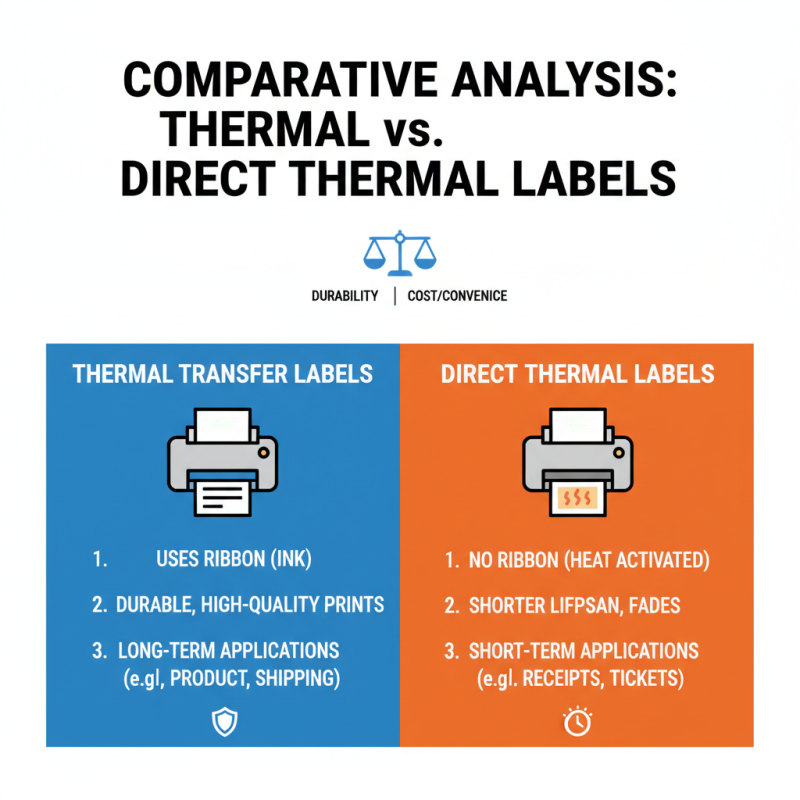
When comparing thermal and direct thermal labels, both have unique advantages and specific applications. Thermal labels utilize a thermal transfer ribbon, transferring ink onto the label, resulting in durable, high-quality prints. This makes them suitable for long-term applications, such as product labeling or shipping. Their resilience against environmental elements is a significant advantage.
On the other hand, direct thermal labels rely on heat-sensitive materials to produce images directly. They are often favored for short-term use since the printed images can fade over time, especially when exposed to heat or sunlight. This method can be cost-effective for temporary applications, like shipping labels or receipts, where longevity is not a concern. However, users must be aware of the potential drawbacks, such as image degradation and reduced durability.
Both types of labels have their places in various industries. The choice between them should be based on specific needs and expected conditions. Users may need more guidance to select the right option for their projects. Understanding each label's strengths and limitations can lead to more informed decisions. It's essential to evaluate the environment where the labels will be used and how long they need to last.
Best Practices for Using Thermal Printing Labels Effectively
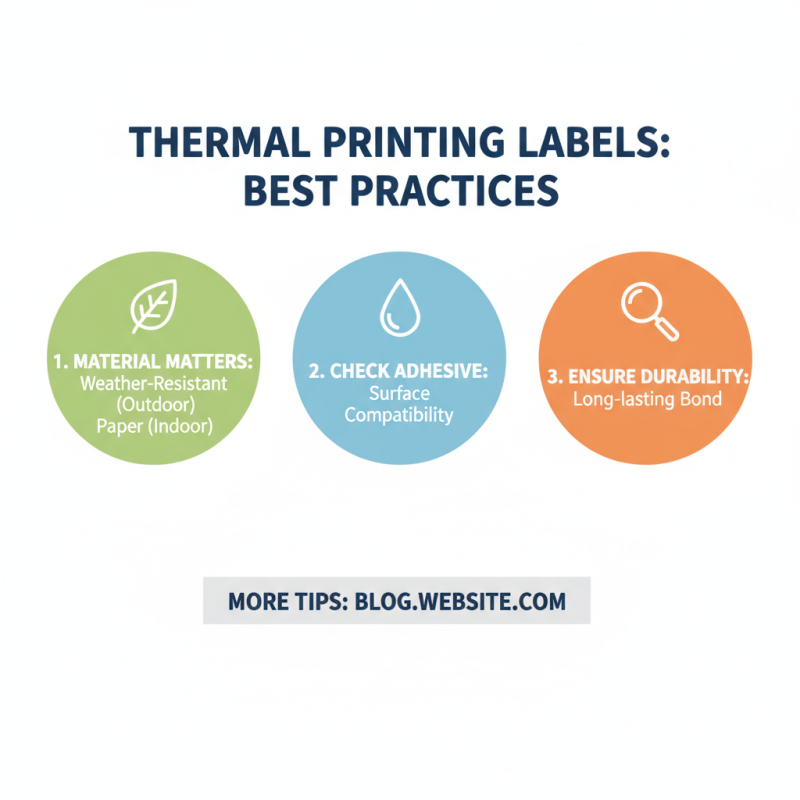
When it comes to using thermal printing labels, understanding best practices can significantly enhance efficiency. Start by choosing the right label materials for your specific needs. For instance, weather-resistant labels are ideal for outdoor use. On the other hand, paper labels may suffice for indoor applications. Ensure the label’s adhesive is compatible with the surfaces you plan to apply them on. Poor adhesion can lead to frustrating failures during your labeling process.
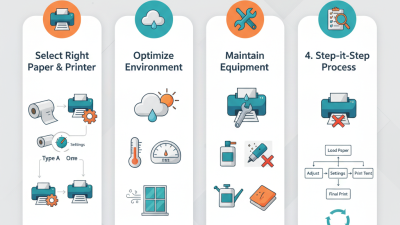
Proper printer settings play a vital role in achieving quality prints. Regularly check your thermal printer’s temperature settings and speed. A too high temperature can lead to smudges, while too low may cause incomplete prints. Experiment with different settings to find the perfect balance for your labels. Additionally, regularly cleaning the printer head can prevent issues caused by residue build-up.
Finally, keep track of your inventory. Overusing labels can lead to wastage and frustration. Evaluate your label consumption regularly and adjust your orders accordingly. Reflect on your labeling process from time to time. This reflection can lead to discovering efficiencies or necessary adjustments to improve overall workflow.




 Phone
Phone Send Email