Inquiry
Leave Your Message
Online Inuiry
WhatsAppWhatsapp 
6503fd048f54d46697

How to Choose the Best Thermal Papers from China?

Choosing the right Thermal Papers from China requires more than comparing prices on a supplier website. Quality depends on paper weight, coating chemistry, image density, roll dimensions, and storage stability. A roll may print clearly in a showroom but fade after weeks in heat, sunlight, or high humidity. That difference matters for receipts, labels, tickets, medical records, and logistics documents.

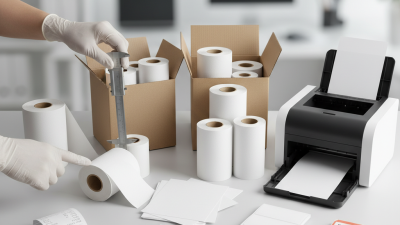
Start with your printer model and application. Confirm the core size, width, length, winding direction, GSM, and outer diameter. Request samples before placing a large order. Test them in real machines, not only by hand. Check blackness, print speed, dust, curling, cutting performance, and resistance to water and oil. Ask suppliers for technical data sheets, safety information, quality-control procedures, and relevant compliance documents. Responsible manufacturers should explain whether their products contain BPA, BPS, or other restricted substances, according to your market requirements.

Supplier verification is equally important. Review factory photos carefully, but do not rely on photos alone. Request recent inspection records, batch traceability, production capacity, and packaging details. A reliable exporter should identify the coating manufacturer and explain how defects are handled. Independent laboratory testing can reduce uncertainty, especially for sensitive applications. It adds cost, but failed shipments cost more.

No checklist is perfect. Small differences in printers, storage rooms, and transport conditions can change performance. Even experienced buyers sometimes overlook carton compression or seasonal humidity. Keep written specifications, approve a sealed reference sample, and inspect each batch against it. The best choice balances stable performance, documented compliance, practical support, and total delivered cost—not the lowest quotation.

How to Choose the Best Thermal Papers from China?

Understanding Thermal Paper Types and Their Core Applications

How to Choose the Best Thermal Papers from China?

Understanding thermal paper types helps buyers match performance with real working conditions. Direct thermal paper forms images through heat, without ink or ribbons. It suits receipts, queue tickets, ATM slips, and short-term shipping labels. Thermal transfer paper uses a ribbon and usually offers stronger resistance to heat, moisture, and abrasion. It fits warehouse labels, product identification, and long-life records. Grand View Research valued the global thermal paper market at about USD 4.15 billion in 2023, with continued growth expected through 2030. This demand reflects wider use in retail, logistics, healthcare, and transportation.

Paper selection should begin with application testing, not price alone. Check basis weight, sensitivity, coating uniformity, image darkness, curl, and roll winding. For Chinese production, ask for batch samples and verify performance at your actual printer speed. A cold warehouse and a hot delivery vehicle can produce different results. Smithers’ thermal paper industry analysis highlights point-of-sale, labels, tickets, and banking documents as major application areas. Compliance also matters. Request current declarations for restricted chemicals, including BPA and BPS, according to the destination market’s requirements. No paper is perfect. Some highly sensitive grades print clearly but fade faster under sunlight.

Tips: Store rolls upright in cool, dry conditions. Keep them away from heat, plasticizers, and direct light. Test ten rolls, not one. Record print density after storage, rubbing, and humidity exposure. A small trial may reveal coating dust, uneven edges, or weak cores before a large order.
Defining Quality Standards for Chinese Thermal Paper

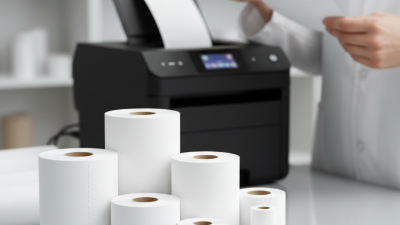
Choosing thermal paper from China should begin with measurable quality, not a low quoted price. In daily receiving inspections, I check roll width, core size, winding tightness, and edge damage. A roll may look clean yet feed poorly after several hours. Ask for basis weight, caliper, coating uniformity, and recommended storage conditions. These figures create a usable quality standard.

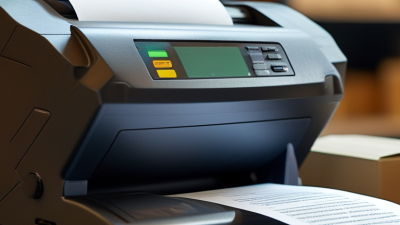
Print performance needs testing on the actual printer model. Compare darkness, contrast, barcode readability, and resistance to water, oil, friction, and heat. A fresh receipt is not enough. Store samples under normal office conditions, then expose others to light and elevated temperature. Measure image density before and after aging. I prefer batch-level inspection reports, retained samples, and traceable production dates. Certificates help, but they do not replace physical testing. That is where my process remains imperfect: short trials can miss seasonal coating changes.

Material safety should be documented clearly. Request declarations for restricted substances, including phenols where applicable, and verify compliance with the destination market’s current rules. Do not accept vague claims such as “eco-friendly.” Check the thermal layer, paper fibers, packaging, and recycling guidance separately. Supplier consistency matters too. Review defect rates across several shipments, not one successful sample. A practical specification should state tolerances, inspection methods, rejection limits, and corrective actions. Keep it readable. Both sides should test the same roll and discuss the same evidence.

Comparing Suppliers, Materials, and Production Capabilities

Choosing thermal paper from China requires more than comparing quoted prices. Supplier capability matters because coating consistency controls print contrast, image life, and machine performance. Grand View Research estimated the global thermal paper market at approximately USD 4 billion in 2023, with continued growth expected through 2030. That expansion increases supplier options, but not every factory offers the same technical control.

Request coating weight records, core dimensions, roll hardness data, and recent batch samples. A practical test should include barcode scanning, dark storage, heat exposure, and repeated handling.

Material selection should match the application. Standard direct thermal paper suits receipts and short-term labels. Top-coated grades perform better in humid stores, transport environments, and self-service machines. For longer image retention, ask about phenol-free chemistry, surface protection, and documented aging results. Smithers’ industry analysis identifies durability, regulatory pressure, and specialty coatings as important thermal paper market drivers. However, supplier claims still need verification.

A certificate alone is not enough.

Production capacity also deserves close inspection. Check whether the factory controls base-paper sourcing, coating, slitting, and packaging internally. Measure lead times during peak seasons, not only in quiet months. An annual capacity figure can sound impressive while available capacity remains limited. Ask for defect-rate records, inspection procedures, and sample approval rules.

I would also compare three consecutive production lots, because one excellent sample can hide unstable coating performance. A cheaper roll may create more waste. That lesson is easy to miss.

Evaluating Pricing, Customization, and Minimum Order Terms

How to Choose the Best Thermal Papers from China?

Price should be judged by usable output, not roll price alone. Grand View Research estimates the global thermal paper market will grow at about 6% annually through 2030. This growth increases supplier competition, but raw material costs still affect quotations. Ask for a full cost sheet covering paper grade, coating, core size, printing, packaging, and freight. A cheaper roll may fade sooner or produce uneven images. I have seen buyers discover this after receiving thousands of rolls. That mistake is expensive.

Customization also changes the minimum order quantity. Standard white rolls usually need less commitment. Printed logos, colored backs, special widths, or custom cores may require dedicated production. According to Smithers’ thermal printing market outlook, retail, logistics, and e-commerce remain major demand sectors. Their requirements differ sharply. A logistics label may need stronger coating, while a receipt needs smooth feeding and clear text. Request samples from the same production line. Laboratory specifications are useful, but real printer testing is better.

Tips

Compare the cost per printed meter. Confirm roll length, thickness, winding direction, and core tolerance. Ask whether the quoted MOQ applies to each size or the complete order. Negotiate a pilot batch before signing a large contract. The smallest MOQ is not always the safest choice. A supplier may accept it, but production consistency can suffer. Recheck storage conditions, too; heat and humidity can damage thermal sensitivity before use.

How to Choose the Best Thermal Papers from China?

Indicative sourcing benchmarks for standard thermal receipt rolls. Prices are shown in USD per 1,000 rolls and vary according to paper grade, roll length, packaging, coating, printing, and shipping terms.

Key takeaway: Smaller 57 mm rolls generally offer lower unit costs but may require higher minimum order quantities. Wider rolls usually cost more per 1,000 rolls, while customization such as private-label packaging, colored printing, and special coating can increase both pricing and MOQ requirements.

Checking Samples, Certifications, Packaging, and Delivery Reliability

How to Choose the Best Thermal Papers from China?

A sample check should go beyond touching the paper. Print several receipts using your actual printer settings. Examine black density, edge sharpness, and fading after heat exposure. Test the paper in cold storage and humid conditions when relevant. Confirm roll width, length, core size, and winding direction. I once saw a smooth sample perform poorly after continuous printing. Surface appearance can mislead.

Ask for certification copies, test reports, and product specifications. Verify whether the documents match the exact paper grade and production site. Check coating details, BPA-free claims, and restricted-substance testing where required. Certificates should be traceable to recognized laboratories or official issuing bodies. Packaging also matters. Moisture-proof bags, strong cartons, and clear lot labels protect paper during ocean transport. Weak packaging can ruin excellent material.

Tips: Request a pilot order before committing to large volumes. Agree on inspection standards, acceptable defect rates, and replacement procedures in writing. Ask for production photos and carton measurements before dispatch. Confirm the manufacturing lead time, shipping schedule, and a realistic buffer for delays. Keep a retained sample from each approved batch. Delivery reliability is not only speed; it is consistency, documentation, and honest communication when plans change.

How to Choose the Best Thermal Papers from China? - Checking Samples, Certifications, Packaging, and Delivery Reliability
Evaluation Area What to Check Recommended Data or Benchmark Verification Method Acceptance Criteria Risk Level
Sample Identification Sample roll specification Record paper width, roll diameter, core diameter, winding direction, length, basis weight, and coating side before testing. Measure with a calibrated ruler, digital caliper, scale, and length counter. Measured results match the quotation and purchase specification; all deviations are documented. Low
Dimensions Width and core size Use the buyer's required dimensions; a practical incoming-control tolerance is typically ±0.5 mm for width and ±0.3 mm for core diameter unless otherwise agreed. Measure at three points on each sample roll and calculate the maximum deviation. Every measurement remains within the agreed tolerance, with no crushed or distorted cores. Medium
Thermal Image Quality Print contrast, background, and coating uniformity Printed text should be dark, sharp, and even, without blank stripes, pinholes, streaks, excessive dust, or visible coating variation. Print the same test pattern on the intended printer at normal operating settings; inspect both text and solid-fill areas. No visible printing defects; text remains legible across the full width of the test receipt. High
Image Durability Resistance to heat, light, moisture, and plasticizer contact Define a retention target suitable for the application, such as clear readability after the buyer's agreed accelerated-aging and contact tests. Store printed samples under controlled heat, light, humidity, and contact conditions, then compare them with an untreated reference. No unacceptable fading, darkening, smearing, or loss of legibility during the agreed test period. High
Basis Weight and Thickness Paper consistency Compare basis weight and caliper with the approved specification; establish a tolerance before mass production. Use a precision scale for basis weight and a micrometer for thickness; test several positions across multiple rolls. Average and individual readings remain within the agreed tolerance, with no abnormal variation between rolls. Medium
Chemical Documentation Restricted-substance and material declarations Request current test reports or declarations covering the requirements applicable to the destination market, including REACH and applicable restricted-substance rules. Check report date, product description, laboratory identity, test method, scope, and whether the tested sample matches the offered grade. Documents are traceable, current, and applicable to the exact paper grade and intended market. High
Management Certification Quality and environmental systems Where relevant, verify valid ISO 9001 or ISO 14001 certificates and confirm the certified scope covers paper manufacturing or converting. Review the certificate number, validity period, certification body, scope, and issuing organization through an independent verification channel. Certificate is valid and the scope is relevant; certification is not accepted as a substitute for product testing. Medium
Packaging Protection Moisture, dust, compression, and edge protection Rolls should be individually protected where necessary, packed in strong cartons or pallets, and secured against movement during transport. Inspect carton strength, internal cushioning, pallet stability, wrapping, corner protection, and moisture-control measures. No wet cartons, telescoped rolls, crushed cores, exposed edges, contamination, or loose loads. High
Traceability Lot and production information Each carton or pallet should show product code, dimensions, quantity, production lot, packing date, and handling instructions. Compare carton labels, packing list, commercial invoice, and internal production records. Every shipment unit can be linked to a production lot and the approved sample or specification. Low
Delivery Reliability On-time and in-full performance Track at least three consecutive shipments. A practical purchasing target is an on-time-in-full rate of 95% or higher. Calculate OTIF as: shipments delivered on or before the agreed date and with the agreed quantity ÷ total shipments × 100. OTIF is at least 95%, with corrective actions for delays, shortages, or repeated documentation errors. High
Lead-Time Control Production and dispatch schedule Obtain separate lead times for sampling, production, quality release, and dispatch; do not rely only on a single estimated delivery date. Compare confirmed purchase-order dates with actual production completion, loading, and arrival dates. Milestones are confirmed in writing and changes are communicated before the agreed shipment date. Medium
Pre-Shipment Inspection Final quantity and quality release Inspect dimensions, appearance, winding, packaging, labels, quantity, and printing performance before shipment. Use a written inspection checklist and retain photographs, test records, and representative samples from the released lot. Shipment is released only after all critical requirements pass and records are complete. High
Commercial Consistency Sample-to-bulk matching The production grade, coating formula, core, packaging method, and dimensions must remain consistent with the approved sample. Compare the approved reference sample with pre-shipment samples and incoming goods from the first production lot. No material change is made without written approval and a new sample or validation test. High
Note: Acceptance limits should be finalized in the purchase specification according to the printer model, end-use environment, destination-market regulations, and required image-retention period. Certificates and laboratory reports should always be checked for validity, scope, and traceability to the actual product grade.