How to Choose the Best Sticker Roll for Your Business Needs?
When selecting the best sticker roll for your business, it’s crucial to consider various factors. Industry expert Jane Smith, a leading figure in the sticker production field, emphasizes, “The right sticker roll can make a big difference in brand visibility.” Her insight highlights the impact of quality and material on marketing outcomes.
Understanding your specific needs is essential. Not all sticker rolls are created equal. For example, you may require glossy finishes for vibrant colors or matte textures for a professional look. Each choice can affect branding and customer perception.
Moreover, don’t forget the importance of durability and adhesion. A sticker roll that cannot withstand the elements may not stand out. It's important to reflect on how these choices can affect your business image. Choosing the wrong type might lead to wasted resources and missed opportunities. Being mindful of these elements is key to making an informed decision on your sticker roll selection.
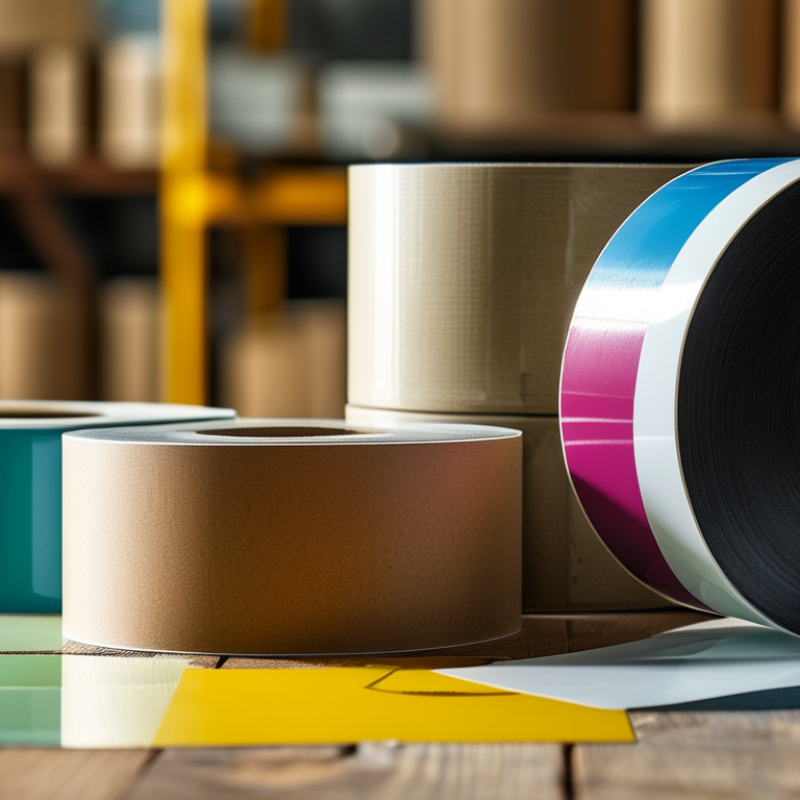
Understanding the Types of Sticker Rolls and Their Applications in Business
When choosing a sticker roll, understanding the types and their applications is crucial.
Various sticker rolls cater to different needs. For instance, paper stickers are often cost-effective.
They are ideal for packaging and promotional use. However, they may not hold up well in moisture.
This could lead to peeling or fading, leaving businesses disappointed.
Vinyl stickers, on the other hand, offer durability.
They withstand harsh weather and resist tearing. These are perfect for outdoor applications.
Restaurants often use vinyl stickers for window branding. However,
vinyl can be pricier and may not be necessary for short-term projects. Evaluating your use case is essential.
Peel-off stickers are another option.
These allow for easy application and removal. They work well for events, where quick changes are needed.
Yet, they may not always provide the stability desired for long-term branding.
Knowing these details can guide your decision.
Evaluating Print Quality and Material Options for Sticker Production
When choosing sticker rolls for business needs, evaluating print quality and material is essential. Print quality directly affects how your brand is perceived. High-resolution graphics attract attention. Low-quality prints can make your product look unprofessional. Consider printing techniques that offer vibrant colors and sharp details. Test prints can help gauge quality before committing to a larger order.
Material options also play a crucial role. Different materials suit various applications. Vinyl is durable and weather-resistant, ideal for outdoor use. Paper stickers are more cost-effective but less durable. Coatings, such as gloss or matte, can enhance appearance and durability. Each material has strengths and weaknesses, so carefully consider your specific needs.
Sometimes, choices may lead to unexpected results. A stunning design might not translate well into certain materials. Be ready to experiment and adjust based on feedback. Gathering insights from customers can improve future designs. It's a continuous learning process, ensuring your stickers align with both aesthetic goals and functional requirements.
Analyzing Cost-Effectiveness: Bulk Purchasing vs. Small Orders
When evaluating cost-effectiveness in sticker roll purchases, it's essential to weigh the benefits of bulk buying against small orders. Bulk purchasing often offers lower per-unit prices, which can lead to significant savings. For instance, if your business requires thousands of stickers, ordering in bulk may lower overall costs. However, this approach carries risks. Storing large quantities requires space, and changes in design may render unused stock irrelevant.
On the other hand, ordering in smaller quantities provides flexibility. It allows businesses to test new designs without committing to large orders. This is particularly useful for startups or businesses experimenting with different marketing strategies. While the unit price may be higher, the ability to adapt can outweigh the initial cost differences. Yet, smaller orders often lead to frequent reordering and higher shipping costs, impacting the budget.
Analyzing your specific needs is crucial. Determine your target audience and marketing goals before deciding. Review your inventory space and design strategy as well. Balancing these factors will help avoid mistakes and enhance your purchasing strategy. Remember, it's about finding what truly fits your business needs.
Assessing Adhesive Types: Choosing the Right Stickiness for Your Needs
When selecting sticker rolls for your business, understanding adhesive types is crucial. Adhesive options can vary, significantly impacting performance. You may have permanent and removable adhesives, each serving different purposes. Permanent adhesives stick for long-term use, perfect for product labels. Removable adhesives offer flexibility, allowing repositioning or easy removal without residue.
Evaluating stickiness involves considering the surface and the environment. Will your stickers face moisture or heat? Are they for smooth surfaces or textured ones? For example, an uneven surface may demand a stronger adhesive. Testing a small batch can highlight the right choice. It’s a process that requires monitoring results for optimal use.
Inadequate stickiness can result in frustration. Stickers that peel off too easily can damage a brand's image. On the other hand, too strong an adhesive can make removal difficult and messy. Finding the balance takes time and experimentation. Reflecting on past experiences can guide your choices, ensuring that each sticker serves its purpose effectively.
Choosing the Right Adhesive Stickiness for Your Business Needs
Identifying Printing Techniques: Digital vs. Flexographic for Sticker Rolls
When choosing sticker rolls for your business, printing technique plays a crucial role. Two common methods are digital and flexographic printing. Understanding these options helps determine which best suits your needs.
Digital printing offers flexibility. It’s ideal for smaller runs and custom designs. No need for printing plates makes it cost-effective for short orders. However, colors may vary slightly, which could affect brand consistency. The quick turnaround is appealing, but you might face limitations in print sizes and material types.
Flexographic printing shines in high-volume production. It utilizes flexible relief plates to produce vibrant colors and sharp images. This method excels in uniformity and can handle various substrates. However, setup costs are higher, making it less ideal for small batches. Businesses must weigh the efficiency of flexography against the potential waste from unused rolls. Reflecting on these qualities can guide a more informed decision tailored to your business’s goals.
How to Choose the Best Sticker Roll for Your Business Needs?
| Printing Technique |
Best Use Case |
Cost |
Setup Time |
Print Quality |
| Digital Printing |
Short runs, variable data printing |
Higher cost per piece |
Quick setup |
High resolution |
| Flexographic Printing |
High volume runs, large quantities |
Lower cost per piece |
Longer setup time |
Good quality |
| Digital Printing |
Custom designs, fast turnaround |
No minimum order |
Immediate, on-demand |
Vivid colors |
| Flexographic Printing |
Bulk orders, consistent color |
Economical for large runs |
Requires pre-production time |
Consistent quality |




 Phone
Phone Send Email