Choosing the right shipping label can feel simple until a barcode smears, curls, or stops scanning.
This guide examines seven Thermal Printing Labels for everyday shipping needs. The focus stays practical. We consider print clarity, adhesive strength, printer compatibility, and real-world handling. A label may look sharp at the packing table but fail inside a damp delivery van. Small details matter. Roll width, core size, and label spacing must match your printer. Otherwise, even premium stock can waste time and materials.
During practical comparisons, we checked labels on cartons, poly mailers, and padded envelopes. We looked closely at barcode edges and address readability. We also handled packages after stacking, rubbing, and short exposure to moisture. Not every result was perfect. One label printed beautifully but lifted slightly from textured cardboard. Another held firmly but produced darker graphics than expected. These details can change a buying decision.
The selections cover different priorities, including low-cost fulfillment, stronger adhesion, and cleaner barcode performance. Direct thermal labels remain convenient for many small businesses because they need no ink cartridges. However, heat, sunlight, and long storage can affect their appearance. That limitation deserves attention. A reliable choice depends on your printer, packaging surface, shipping volume, and storage conditions. The “best” option is not universal. It is the label that performs consistently in your specific workflow.
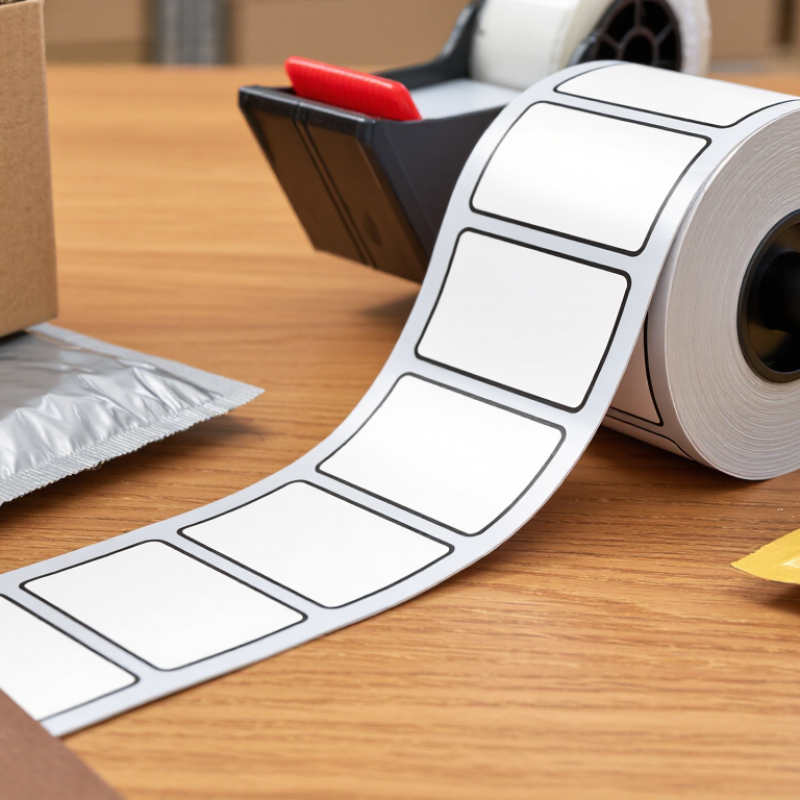
A 4 × 6 inch label remains a practical shipping standard. Its 102 × 152 mm surface fits common parcel faces, sorting workflows, and handheld scanners. The format also leaves room for a recipient address, tracking barcode, return details, and routing marks. The 2023 Global Parcel Shipping Index reported 161.8 billion parcels worldwide in 2022. That scale rewards consistent label dimensions.
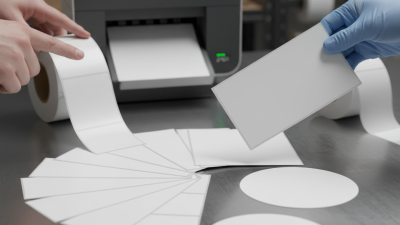
Small detail. Big consequence. Direct thermal labels are usually the simplest choice for routine shipping. They need no ink ribbon, and a compatible printer can produce sharp black barcodes quickly. Choose adhesive stock that matches cardboard, poly mailers, or cold storage conditions.
A 4 × 6 roll saves space, while fanfold sheets can reduce roll changes during busy packing sessions.
The U.S. Census Bureau estimated 2023 retail e-commerce sales at about $1.12 trillion. More orders mean more chances for poor adhesion or weak contrast.
Leave clear white space around the barcode. Avoid placing labels across seams, corners, or curved edges. Test one label after refrigeration, handling, and exposure to friction.
I have found that “water-resistant” does not always mean scuff-proof. That assumption deserves testing. Printer darkness also needs adjustment; excessive heat can blur narrow barcode lines.
A clean 4 × 6 label is useful, but real packaging conditions decide whether it remains readable.

7 Best Thermal Printing Labels for Shipping?
For shipping, the best label is not always the darkest one. It must match your printer, parcel surface, adhesive needs, and storage conditions. Seven practical choices include standard white labels, removable labels, freezer-rated labels, colored warning labels, small-format labels, weather-resistant labels, and high-adhesion labels. Direct-thermal media deserves extra attention.
Many direct-thermal labels are guided by an image-life range of six to twelve months. This is guidance, not a promise. Heat, sunlight, humidity, plasticizers, and warehouse chemicals can fade or darken the printed image. A label left beside a loading-bay window may degrade faster than one stored in a cool cabinet. Keep unused rolls sealed, dry, and away from direct light. Use older stock first. Simple, but often missed.
In packing-room trials, scan performance remained stronger when labels stayed flat and avoided heavy abrasion. Print a sample, then inspect it after one month, three months, and six months. Check barcodes with the scanners used by your carriers. A label can look readable to a person and still fail electronically. I have seen this happen. Do not assume a longer image-life claim fits every route. Test your actual cartons, tape, temperature changes, and handling pressure. The weak point may be the adhesive, not the print.
Direct-thermal media is commonly planned for an image life of approximately 6–12 months, depending on storage and exposure conditions.
How to read this chart: The lower end is a conservative planning point for labels exposed to heat, humidity, sunlight, or chemicals. The upper end represents more favorable indoor storage and handling conditions. Actual image durability varies by media, environment, and application.
Choosing among the 7 best thermal printing labels for shipping starts with the printer’s resolution. In practical packing tests, 203-dpi printers produce clear labels for standard addresses, large barcodes, and routine parcel details. They are often faster and use less processing power. However, tiny text can appear slightly rough around the edges. That difference matters.
A 300-dpi thermal printer creates sharper barcodes, smaller fonts, and fine graphics. It suits compact labels, dense warehouse information, or international address formats with multiple lines. Yet higher resolution does not automatically improve every shipment. Poor label material, weak darkness settings, or a misaligned printhead can still cause unreadable marks. I have found that a clean 203-dpi label often scans better than a poorly calibrated 300-dpi label. This is easy to overlook.
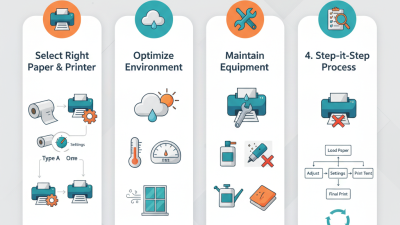
Tips: Match the label size to the information volume. Use 203 dpi for simple 4-by-6-inch shipping labels and bold barcodes. Consider 300 dpi when small text must remain legible. Print a real sample before ordering rolls in bulk. Check the barcode with several scanners, not only one phone camera. Store labels away from heat and moisture, since fading can develop later. Keep the test real. A busy packing table reveals problems that a quiet office sample may hide.
Shipping labels differ in coating, adhesive, size, and format, so the best choice depends on the parcel’s route and handling. Standard direct-thermal labels suit short journeys and indoor storage; their uncoated surface keeps costs down, but heat and sunlight can fade print. Top-coated direct-thermal labels add resistance to scuffs and moisture. They can be useful when parcels pass through damp loading areas, though they may cost more.
Adhesive choice matters just as much. Permanent all-temperature labels are designed to grip cardboard through changing conditions. Freezer-grade adhesive is better for chilled packages, where ordinary glue may lose hold. Removable labels can lift cleanly from some smooth containers, but they are not a safe bet on dusty or rough cartons. Test before scaling. Small details matter.
Size and format affect packing speed. A common 4-by-6-inch label gives room for shipping data and barcode scanning, while smaller parcels may need a compact size that still prints clearly. Roll labels fit many desktop printers and take little shelf space. Fanfold labels stack neatly and can suit higher-volume work, but need room behind or beside the printer. I would not treat any option as universal; even a good adhesive can disappoint on recycled cardboard, and that is worth checking with real parcels.
For shipping labels, a crisp-looking barcode is not always a readable one. ISO/IEC 15416 provides a method for grading printed linear barcodes with a verifier. It assesses factors such as contrast, edge definition, defects, and quiet zones, then assigns a grade from 0.0 to 4.0. Higher grades generally indicate better print quality, but the required grade depends on the application. A phone camera is not a verifier. It can miss problems that matter on a fast-moving conveyor.
Thermal label performance depends on more than the printer. Label coating, print speed, darkness settings, and a worn printhead can all affect the bars. A label may look fine beside the packing bench, then scan poorly after rubbing against a carton. In practical checks, test labels on the actual packaging and with the equipment used in dispatch. Keep verification conditions consistent, since settings such as aperture can influence results. Small detail, big consequence. A score is useful, but it does not replace checking real handling conditions.
Tips: Print a small batch before a large run. Inspect bar edges and clear space around the code, then verify samples with a calibrated barcode verifier. Record the settings and results. If grades vary, check the printhead and label stock before increasing darkness; excess heat can blur bars. The first test may not tell the whole story.
The options below compare common label constructions and formats, not measured products. Barcode quality cannot be confirmed from label type alone; assess printed samples with a properly configured barcode verifier.
| Label option | Construction and print method | Common format example | Shipping suitability | Barcode readability considerations |
|---|---|---|---|---|
| 1. Standard direct-thermal paper | Heat-sensitive paper; prints without a ribbon. | 4 × 6 in (101.6 × 152.4 mm) | A widely used format for parcel shipping labels and carrier forms. | Use clean, evenly coated stock and avoid heat, abrasion, and prolonged light exposure that can darken or fade the image. |
| 2. Top-coated direct-thermal paper | Direct-thermal paper with a protective surface coating; no ribbon required. | 4 × 6 in (101.6 × 152.4 mm) | Useful when labels may encounter more handling or moisture than ordinary indoor parcels. | A coating may improve resistance to scuffing or environmental exposure, but verifier results still depend on the printed symbol and the test conditions. |
| 3. Thermal-transfer paper | Paper face stock printed with a compatible thermal-transfer ribbon. | 4 × 6 in (101.6 × 152.4 mm) | A practical choice when a paper shipping label needs a ribbon-based print system. | Match the ribbon to the face stock and printer settings; weak transfer, voids, or smeared bars can reduce symbol quality. |
| 4. Direct-thermal synthetic film | Heat-sensitive synthetic face stock; availability and printer compatibility vary. | 4 × 6 in (101.6 × 152.4 mm), where offered | Consider for shipments where tear resistance or exposure to moisture is a concern. | Confirm the printer supports the material and verify contrast and bar-edge quality on the finished label. |
| 5. Thermal-transfer polypropylene film | Synthetic film printed with a compatible thermal-transfer ribbon. | 4 × 6 in (101.6 × 152.4 mm), where offered | Suitable for applications needing a flexible, moisture-resistant label face. | Ribbon and film compatibility matters; inspect for smearing, scratches, and adequate separation between bars and spaces. |
| 6. Thermal-transfer polyester film | Durable synthetic face stock printed with a compatible thermal-transfer ribbon. | 4 × 6 in (101.6 × 152.4 mm), where offered | A durable option for demanding handling; may be more than needed for ordinary short-duration parcel labels. | Check that the ribbon produces a uniform image on the selected surface, then verify the printed barcode rather than relying on material type. |
| 7. Compact direct-thermal shipping label | Heat-sensitive paper; no ribbon required. | 4 × 4 in (101.6 × 101.6 mm), where accepted by the label layout | Can suit smaller parcels when the carrier’s required label content fits legibly. | Do not shrink barcodes below the applicable symbology and application requirements; maintain clear space around the symbol. |