China Top Till Rolls Manufacturers and Suppliers
China’s position in the global till rolls supply chain matters to retailers, wholesalers, and equipment distributors seeking dependable sourcing. The National Bureau of Statistics of China reported that retail sales of consumer goods reached RMB 48.8 trillion in 2024, increasing 3.5% year over year. That scale helps explain the continuing need for receipt paper across supermarkets, restaurants, pharmacies, and convenience stores. Yet market size alone cannot identify a reliable supplier.
Thermal paper demand also offers useful context. Grand View Research estimated the global thermal paper market at approximately US$4.4 billion in 2023 and projected growth through 2030. Forecasts are not guarantees. Buyers still need to check roll width, diameter, core size, paper weight, coating consistency, and compatibility with specific printers. A roll that looks right may still jam at the counter. Small details matter.
This guide examines leading China till rolls manufacturers and suppliers through practical sourcing criteria, including production capability, quality controls, customization, export experience, and communication. Requesting product samples and clear specifications can reveal problems before a large order is placed. Certifications and published test results are useful, but they should be verified against the product being purchased. I would not rely on a polished catalogue alone. The goal is to help buyers compare suppliers with evidence, while recognizing that the best choice depends on order volume, application, and service expectations.
What Till Rolls Are and Where They Are Used
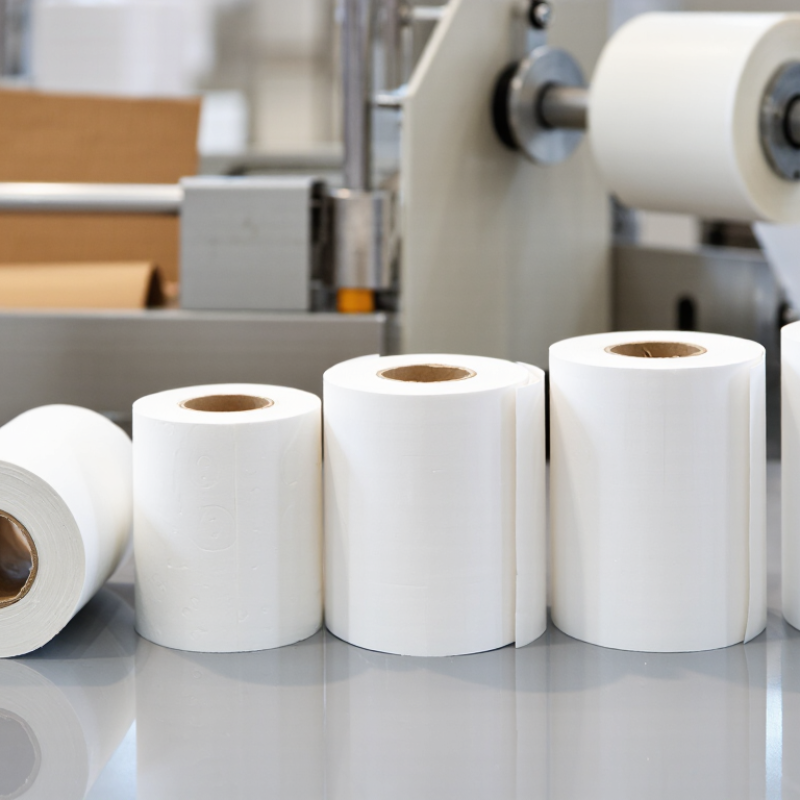
Till rolls are narrow paper rolls fitted inside cash registers, point-of-sale terminals, and receipt printers. They provide the paper for printed transaction records, order slips, and queue tickets. A cashier may replace one during a busy shift, so easy loading and consistent feeding matter.
Many modern terminals use thermal till rolls. A heated print head darkens the paper’s coated surface, so no ink ribbon is needed. Some printers instead use plain paper with an ink ribbon. The correct type depends on the machine. Width, roll diameter, and core size must also match; a roll that looks close may still jam or fail to fit. Small details matter.
You’ll find till rolls at grocery checkouts, cafés, pharmacies, parking machines, and self-service kiosks. In a café, for example, a clear receipt can show the order time and item details. Thermal receipts can fade if stored near heat, sunlight, or friction, which is worth considering when records must be kept. Paper choice is not always straightforward. Test a sample roll if the printer specifications are unclear. Also check that the paper unwinds smoothly and prints legibly from the first line to the last.
Common Till Roll Types, Sizes, and Paper Specifications
Till rolls mainly use thermal paper or plain bond paper. Thermal grades form an image through heat, so they need no ink ribbon. Bond rolls use an impact printer and require a ribbon. Smithers’ The Future of Thermal Papers to 2028 estimates global thermal-paper demand at about 1.3 million tonnes in 2023, reflecting its broad use in receipts and labels. A market-wide figure, though, cannot tell buyers which roll fits a specific terminal.
Common receipt widths are 57 mm and 80 mm. A 57 mm roll suits compact counters; an 80 mm roll leaves more room for item lines and return details. Roll length depends on paper thickness and outside diameter, while core size must match the holder. Typical thermal paper weighs around 48–55 g/m², but heavier grades can feel stiffer. Short rolls sell fast. Check the actual roll diameter, not just the advertised length.
For reliable ordering, specify width, roll diameter, core diameter, winding direction, and paper grade. ISO 536 measures paper grammage, while ISO 534 covers thickness—two useful checks when comparing supplier samples. Thermal coatings also vary in sensitivity and image durability; heat, sunlight, and friction can fade print. One detail is easy to miss: a roll may fit the spindle yet still jam if its outer diameter is too large. Requesting a sample is often wiser than trusting a catalog line alone.
How Till Rolls Are Manufactured in China
Till-roll manufacturing in China usually begins with thermal base paper supplied in large parent reels. Operators inspect roll width, surface smoothness, and coating consistency before converting it into smaller rolls. China Paper Association’s 2023 Annual Report recorded 127.05 million tonnes of paper and paperboard production nationwide. That figure describes the wider paper sector, not till rolls alone, but it shows the scale of the upstream supply base.
Thermal coating is applied to paper using controlled coating and drying equipment. Heat-sensitive chemicals must form an even layer; uneven coating can produce pale receipts or dark patches. After drying, parent reels are slit to the buyer’s specified width, then rewound around paper cores. Small details matter. Tension, edge alignment, and clean cutting affect how smoothly a roll feeds through a printer.
Quality checks may include basis weight, roll length, image density, heat response, and resistance to smudging. In export production, suppliers also verify core diameter, outer diameter, and packaging protection against moisture. These checks are practical, but not infallible: storage conditions can still change paper performance. Buyers should request test records and evaluate samples under their actual printer and handling conditions. Industry figures rarely isolate Chinese till-roll output, so broad paper-production statistics should not be mistaken for roll-specific capacity.
How to Evaluate Chinese Till Roll Suppliers
Evaluating a Chinese till roll supplier starts with clear, measurable specifications. Confirm roll width, diameter, core size, paper weight, and stated roll length. Ask how each measurement is checked during production. A sample may look correct but contain fewer metres than expected. Measure it. Also test the paper in the printer models you use; tight cores, curled edges, or dusty cuts can cause daily problems. Small details matter.
Request recent inspection records, production lead times, and packaging details. Rolls should arrive dry, clean, and protected from crushing. Ask for documentation describing the paper’s composition and the quality checks used for image clarity and fading resistance. Then test samples under ordinary storage conditions, not just straight from the carton. A dark image today does not prove it will remain readable later. That is not enough.
Communication is another useful measure. Send the same specification sheet to several suppliers and compare how precisely they answer, especially about tolerances, custom packing, and replacement procedures. A polished catalogue is easy to prepare; consistent batches are harder to demonstrate. Consider a small trial order before committing to larger volumes, and record defects by batch. Even careful sampling has limits: one good shipment cannot guarantee every future run. Keep that in mind.
China Till Roll Supplier Evaluation: Common Thermal Paper Widths
57 mm and 80 mm are common thermal receipt paper widths. When evaluating suppliers, confirm that the roll width and other specifications match your printer model.
Key Factors When Sourcing Till Rolls from China
When sourcing till rolls from China, begin with the printer, not the price list. Confirm roll width, outer diameter, core size, and winding direction against your machine. A roll that is slightly too wide can jam; one with a loose core may feed unevenly. Specify paper weight and thermal coating, too. Ask for a sample from the actual production grade, not a substitute offered for testing.
Test samples in your own printers. Check print darkness, edge quality, curl, paper dust, and whether receipts remain readable after ordinary handling and storage. Measure roll length rather than relying on diameter alone. It is easy to miss. Request written specifications, inspection records, and relevant material declarations for your destination market. A polished sample is useful, but it cannot prove every batch will match.
Compare suppliers on consistent terms: minimum order quantity, production lead time, packaging, payment schedule, and delivery arrangements. Ask how rolls are protected from moisture during storage and transit; damp cartons can affect paper performance. Clarify who checks dimensions and coating before shipment, and how defects are handled. Quotes can look comparable while covering different paper grades or roll lengths. I would not choose on the lowest unit price alone. Still, a detailed checklist will not prevent every surprise, so keep your first order manageable and record what actually arrives.






 Phone
 Send Email