Leave Your Message
Choosing the best Till Rolls in 2026 requires more than comparing prices. Retail buyers must examine paper quality, roll length, core dimensions, printer compatibility, packaging, and supply reliability. A roll that jams during a Saturday rush can cost more than its invoice price. The details matter.
Smithers’ thermal-paper market research identifies retail and point-of-sale printing as major demand areas, while Grand View Research continues to track steady growth in the global thermal paper market. These reports indicate a practical reality: demand is expanding, but procurement standards are also becoming stricter. Buyers increasingly assess BPA- and BPS-free options, recyclable packaging, coating consistency, and traceable sourcing. Regional requirements may differ, so supplier documentation deserves careful review.
“Retailers are under pressure to make every transaction faster, clearer, and more reliable,” says Greg Buzek, founder of IHL Group. His observation applies directly to receipt materials. Till Rolls are small, yet they influence checkout speed, customer confidence, and daily operating costs.
A good roll should print dark text without excessive heat. It should feed smoothly and leave no loose paper dust inside the printer. Measure before ordering. Confirm width, diameter, core size, and winding direction. This sounds basic. It is often overlooked.
This 2026 guide compares leading Till Rolls for global retail buyers, focusing on performance, sustainability, supplier consistency, and total cost. Some conclusions remain open to debate, especially where environmental claims lack independent verification. Smart purchasing requires evidence, not attractive packaging alone.
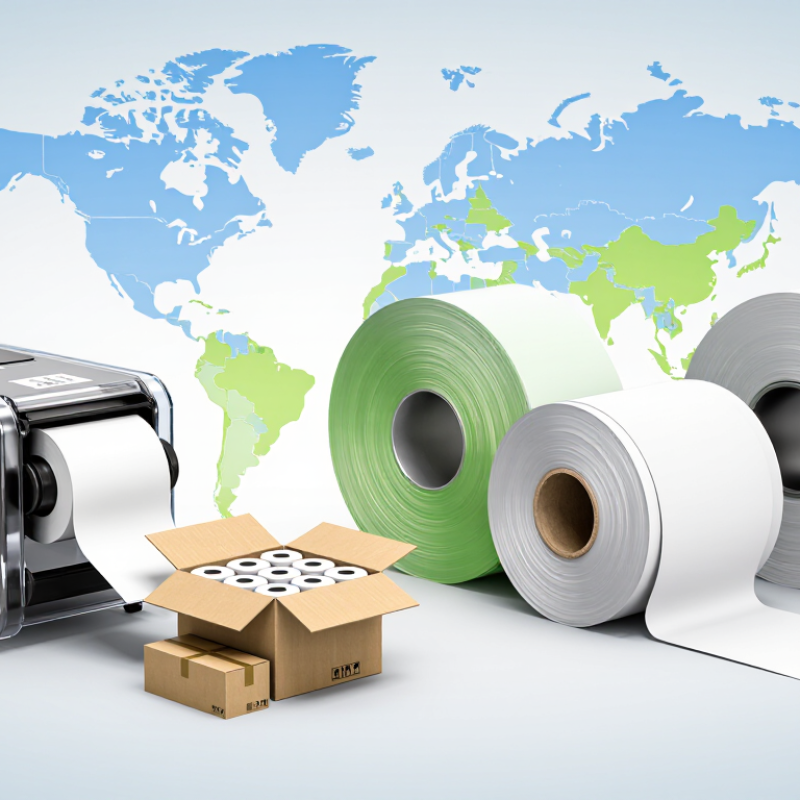
Till rolls are the narrow paper rolls used in checkout printers, kiosks, fuel stations, and service counters. Most are thermal rolls, which create text through heat rather than ink. Their quality affects receipt clarity, scanning, storage, and customer trust. A faded receipt can delay refunds or complicate expense records. A poorly sized roll can also stop a busy checkout within minutes.
Industry research supports their continuing importance. Smithers’ report, The Future of Thermal Papers to 2028, identifies point-of-sale printing as a major thermal-paper demand segment. The Global E-waste Monitor 2024 recorded 62 million tonnes of electronic waste in 2022. It expects that figure to reach 82 million tonnes by 2030. Till rolls are not the largest waste source, but retail buyers still influence material use through roll length, packaging, and disposal choices. EU rules restrict bisphenol A in thermal paper to below 0.02% by weight. Global buyers should verify chemical declarations, not rely only on attractive claims.
Tips: Confirm printer width, core size, roll diameter, and winding direction before ordering. Test readability after heat, moisture, and light exposure. Ask for FSC certification or recycled-content evidence when sustainability matters. I have seen buyers choose the lowest unit price, then lose money through shorter rolls and frequent replacements. That calculation deserves another look. Keep samples from actual checkout equipment. Lab specifications can miss real operating conditions.
| Roll Type | Printing Method | Typical Sizes | Common Applications | Key Advantages | Main Limitations | Storage and Handling | Global Buyer Suitability |
|---|---|---|---|---|---|---|---|
| Standard Thermal Receipt Roll | Direct thermal; heat-sensitive coating creates the image without ink or ribbon. | 57 × 40 mm; 80 × 80 mm; 80 mm wide rolls with length varying by outer diameter. | Supermarkets, convenience stores, pharmacies, restaurants and general point-of-sale terminals. | Fast and low maintenance Clean operation, quiet printing and simple roll replacement. |
Image can fade or darken when exposed to heat, sunlight, plasticizers or strong chemicals. | Store in a cool, dry and dark location. Keep away from direct sunlight, heat sources, PVC and solvents. | Strong all-purpose choice where short- to medium-term receipt readability is acceptable. |
| Long-Length Thermal Roll | Direct thermal printing. | 80 mm wide; larger outer diameters designed for extended receipt length. | High-volume checkout lanes, hypermarkets, transport counters and self-service kiosks. | Fewer roll changes Can reduce cashier interruptions and packaging waste per printed metre. |
Requires printer compatibility and sufficient clearance inside the terminal; heavier rolls may be less convenient to load. | Protect rolls from edge damage and humidity. Confirm maximum roll diameter and core size before ordering. | Best for high-throughput sites with compatible printers and centralized purchasing. |
| Phenol-Free Thermal Roll | Direct thermal using a coating formulated without intentionally added BPA or BPS developers. | Commonly available in 57 mm and 80 mm widths; length depends on roll diameter. | Retailers seeking restricted-substance policies, employee handling controls or sustainability documentation. | Policy-friendly option Supports procurement requirements that restrict certain thermal-paper developers. |
“Phenol-free” specifications vary; the term should be verified through supplier technical documentation and compliance statements. | Use the same protection as other thermal paper. Avoid prolonged exposure to heat, light and moisture. | Preferred where chemical-compliance requirements are important across multiple markets. |
| ECO Thermal Roll | Direct thermal with reduced material use, recycled content, certified sourcing or other documented environmental attributes. | 57 mm and 80 mm widths are common; dimensions depend on the printer and material specification. | Retail chains with paper-reduction targets, environmental reporting or responsible-sourcing programs. | Lower-impact procurement potential May reduce virgin fibre use or packaging weight when supported by verified specifications. |
Environmental claims are not automatically equivalent; recycled content, certification, coating chemistry and packaging should be assessed separately. | Maintain dry storage and protect the printable surface. Review certification scope and chain-of-custody documents where required. | Good for buyers balancing operational performance with documented environmental objectives. |
| Bond Paper Till Roll | Impact or inkjet printing using an ink ribbon, cartridge or other ink system. | 57 mm and 76–80 mm widths are common; roll length varies by printer and paper weight. | Systems requiring durable text, archival records or printing on non-thermal paper. | Longer image stability Printed information is generally less sensitive to heat than direct thermal images. |
Needs ink or ribbon supplies, regular maintenance and a compatible impact or inkjet printer. | Store flat or upright in a dry area. Avoid excessive humidity, dust and pressure on roll edges. | Suitable when record retention or heat resistance is more important than minimum maintenance. |
| Two-Ply Carbonless Roll | Impact printing; pressure transfers information from the top sheet to the copy sheet. | Custom widths and roll diameters are common; exact dimensions depend on the printer. | Duplicate receipts, delivery acknowledgements, service tickets and signed transaction records. | Creates an immediate copy Useful where the customer and merchant need separate paper records. |
Requires impact printing and produces more paper volume. Not suitable for standard direct-thermal printers. | Keep away from high humidity, excessive heat and pressure that may cause unwanted marking or image transfer. | Best for operations that still require physical duplicate documentation. |
| Three-Ply Carbonless Roll | Impact printing with one original and two pressure-sensitive copy layers. | Custom sizes are typical; printer compatibility must be confirmed before purchase. | Multi-party delivery documents, repair orders, logistics records and regulated workflows. | Multiple simultaneous copies Supports separate records for several parties. |
Thicker rolls, higher paper consumption and more complex handling than single-ply formats. | Protect from heat, humidity and pressure. Check roll winding direction and ply sequence. | Appropriate only where multiple paper copies are operationally necessary. |
| Self-Adhesive Label Roll | Usually direct thermal or thermal-transfer printing on pressure-sensitive label stock. | Widths and label lengths vary widely; common formats include small barcode and shelf-label rolls. | Price labels, product identification, stock control, click-and-collect orders and shipping workflows. | Combines printing and application Supports item-level identification and automated scanning. |
Adhesive performance depends on surface, temperature and moisture. Labels require compatible media settings. | Store in original packaging, away from moisture and extreme temperatures. Protect adhesive edges from contamination. | Best for retailers needing printed labels rather than loose receipts. |
| Durable Thermal-Transfer Roll | Thermal transfer; a ribbon transfers ink onto coated paper, synthetic or film media. | Media width and core size depend on the printer; custom formats are common. | Asset tags, long-life labels, freezer applications, warehouse identification and product tracking. | High durability potential Can provide stronger resistance to abrasion, moisture and chemicals than standard receipt paper. |
Requires a compatible ribbon and printer settings. Usually costs more than basic receipt media. | Match ribbon chemistry to the label material. Store media clean, dry and protected from dust. | Recommended for durable identification tasks rather than ordinary customer receipts. |
| Recycled-Fibre Receipt Roll | Direct thermal or impact printing, depending on the paper construction. | Commonly supplied in 57 mm and 80 mm widths; printer-specific core and length requirements apply. | Retail receipts and internal transaction records where recycled fibre is part of the purchasing policy. | Supports recycled-content goals Can reduce reliance on virgin paper fibre when verified by product documentation. |
Not all recycled-fibre rolls have the same coating, image life or recyclability profile. | Keep dry and away from heat. Confirm coating chemistry and recycled-content percentage for each specification. | Useful where documented recycled content is prioritized without changing printer hardware. |
| Buyer note: Before placing a global order, verify printer technology, roll width, maximum outer diameter, core diameter, winding direction, paper weight, coating chemistry, image-retention requirements, local chemical regulations and end-of-life rules. Thermal paper recycling acceptance varies by jurisdiction and should be confirmed with the local recycling authority. | |||||||






 Phone
Phone Send Email