What Is the Best Sticker Roll Manufacturer in China?
Choosing the best Sticker Roll manufacturer in China requires more than comparing prices. A reliable supplier should deliver consistent printing, clean cutting, strong adhesive, and accurate roll winding. These details affect packaging speed, shelf appearance, and customer trust.
This guide examines practical factors that experienced buyers should check before placing an order. Product samples can reveal color differences, curling edges, weak cores, or uneven spacing. A factory tour, video inspection, or independent audit may provide stronger evidence than attractive website images. Ask about material options, adhesive performance, printing methods, quality controls, and production capacity. Certifications also matter, especially when stickers contact packaging, cosmetics, food-related products, or children’s items.
The best choice depends on your application, budget, and delivery requirements. Not every large factory is suitable for small customized orders. Not every low-cost supplier offers dependable quality. I have learned that clear specifications prevent many avoidable problems. Still, no supplier is perfect. Even approved samples may not represent every production batch. Buyers should confirm tolerances, inspection procedures, replacement policies, and shipping responsibilities in writing. A trustworthy manufacturer communicates limitations honestly and responds with useful technical answers. This article will help compare Chinese Sticker Roll manufacturers through quality, experience, customization, communication, and long-term reliability. The final decision should come from evidence, not promises.
What Defines a High-Quality Sticker Roll Manufacturer in China?
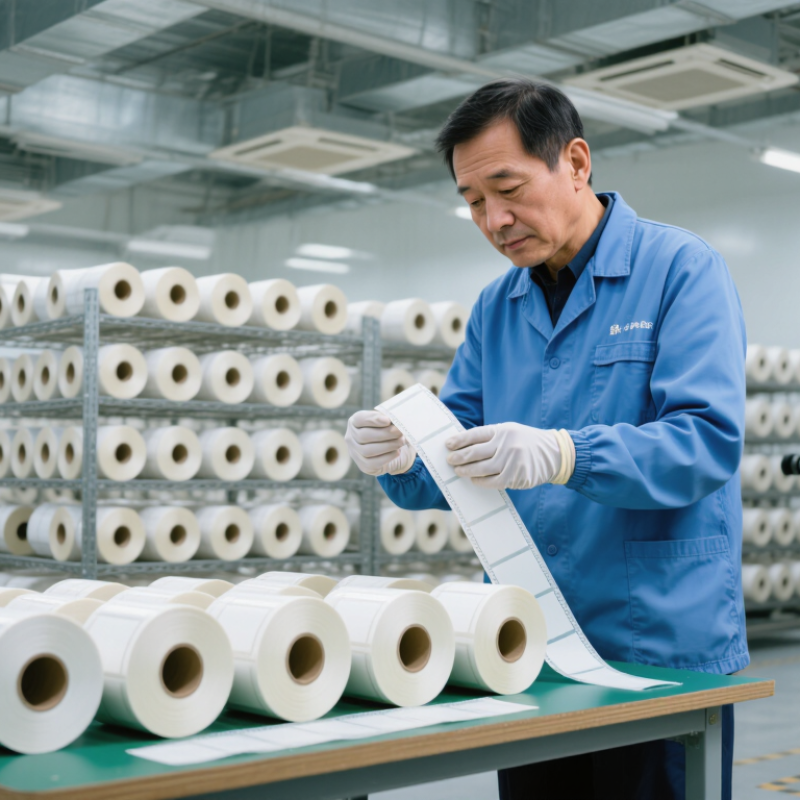
A high-quality sticker roll manufacturer in China is defined by control, not attractive samples. Grand View Research valued the global labels market at USD 45.1 billion in 2023. It forecasts a 4.5% compound annual growth rate through 2030. This growth increases pressure on factories to deliver consistent rolls, not occasional excellence.
Material selection should match the application.
A professional supplier checks face-stock thickness, adhesive coat weight, release force, and liner moisture. For thermal transfer labels, surface smoothness matters. For outdoor stickers, UV resistance and aging tests matter more.
Winding tension must remain stable, or rolls may telescope during transport. Color should be measured with spectrophotometers, using an agreed Delta E tolerance. Human inspection still matters. Machines miss context.
Traceability is another quality signal. Each roll should connect to a batch record, inspection result, and retained sample. ISO 9001 certification can support this system, but it does not guarantee perfect production. Smithers’ industry analysis, The Future of Labels and Packaging to 2028, identifies continued demand for shorter runs, faster changes, and digital workflow flexibility. A capable manufacturer should therefore explain setup waste and changeover controls clearly. Ask for actual test data, not polished claims.
No factory is flawless. I would still approve a supplier only after checking several production batches, including a difficult color and a low-temperature shipment simulation. That extra step feels slow. It prevents expensive surprises.
Key Factors for Comparing Chinese Sticker Roll Manufacturers
Choosing the best sticker roll manufacturer in China requires more than comparing unit prices. Grand View Research estimates the global self-adhesive labels market reached about US$49.9 billion in 2023. It also forecasts a 5.2% compound annual growth rate through 2030. This growth increases supplier choices, but not necessarily supplier quality.
Check production evidence before negotiating long-term orders. Ask for recent test reports covering adhesive strength, roll tension, print clarity, and release performance. A reliable factory should explain its coating process and show controlled storage conditions.
Request samples from several production batches, not one carefully selected roll. Small variations matter.
FINAT Radar 2024 reported weaker demand and inventory correction in parts of the label market. Therefore, financial stability and capacity planning deserve attention. Review delivery records, complaint handling, backup equipment, and material traceability. Confirm whether the manufacturer can maintain consistent quality during peak seasons. Certifications help, but certificates alone prove little.
I have seen polished audit files hide weak process control. That is worth questioning.
A practical comparison should score price, defect rate, lead time, communication, and after-sales response separately.
The cheapest quote may become expensive after rewinding, replacement shipping, or production delays. Also examine packaging details, such as edge protection, moisture barriers, and readable batch codes. These simple details often reveal how seriously a manufacturer manages export orders.
Leading Sticker Roll Manufacturing Regions and Capabilities
China’s strongest sticker roll manufacturing regions are Guangdong, Zhejiang, Jiangsu, and Fujian. Each area has a different production advantage. Guangdong supports fast export logistics and flexible digital printing. Zhejiang offers mature converting clusters, rotary die-cutting, and high-volume roll production. Jiangsu is known for precise coating, automation, and industrial label applications. Fujian often performs well in short lead times and customized packaging orders.
Smithers’ The Future of Labels and Labeling to 2028 estimates the global labels market exceeded 48 billion US dollars in 2023, with continued growth driven by pressure-sensitive formats. FINAT’s market reports also show strong demand for efficient, variable-data, and sustainable label solutions. A capable Chinese supplier should therefore provide stable adhesive coating, accurate rewinding, clean slitting, and documented quality checks. These details matter more than a low quotation. In practice, some factories still describe “premium” capacity too broadly. That deserves questioning.
Tips: Ask for coating weight, roll tolerance, core size, adhesive test results, and recent inspection records. Request samples from the same production line, not showroom samples. Confirm whether the supplier controls printing, coating, slitting, and packing internally. A factory near Ningbo may offer different logistics advantages from one near Shenzhen. Also check whether its sustainability claims include measurable recycled content or waste data. Small gaps often become expensive delays.
How to Evaluate Quality, Customization, and Production Standards
Choosing the best sticker roll manufacturer in China requires more than comparing prices. Quality begins with the material. Ask for adhesive data, paper or film specifications, and roll-width tolerances. Check whether labels peel cleanly without leaving residue. Inspect the edges, winding tension, and core alignment. A loose roll can jam packaging equipment.
Customization should be tested, not assumed. Request a physical sample with your exact size, colors, finish, and barcode placement. Review color consistency under warehouse lighting. Confirm minimum order quantities, cylinder or plate charges, and proof approval procedures. Production standards matter equally. A reliable factory should maintain batch records, incoming-material checks, print inspections, and final sampling. Certifications can support credibility, but they do not replace an audit or a sample review.
Tips: Ask for three recent production samples. Measure label width with a caliper. Test adhesion on your real packaging. Confirm storage conditions and delivery protection. Keep written specifications. Small omissions become expensive later. A glossy sample may hide weak adhesive. No checklist is perfect. I would also review how the manufacturer handles defects, because honest correction often reveals more than a flawless presentation. Look for clear communication, traceable records, and practical answers from the production team.
Choosing the Best Sticker Roll Manufacturer for Your Business
Choosing the best sticker roll manufacturer starts with your application, not a catalog. A food jar, shipping carton, and cosmetic bottle need different facestock, adhesive strength, and moisture resistance. Ask for samples made with your actual printer and surface. Check edge lift after 24 hours. Also inspect roll tension, core size, winding direction, and splice control. Small details prevent costly machine stoppages.
A reliable manufacturer should explain material specifications clearly. Request data for thickness, adhesive type, release liner, temperature range, and print compatibility. Their quality system should include incoming material checks, in-process inspection, and final roll testing. Batch numbers and inspection records improve traceability. Ask how they handle color variation and defective sections. Transparent answers matter more than polished sales language. I once focused too heavily on unit price and overlooked inconsistent roll tension. The cheaper order created waste and delayed production.
Production capability must match your purchasing pattern. Confirm minimum order quantities, lead times, sample approval steps, and capacity during peak seasons. A capable technical team can recommend adjustments without forcing unnecessary upgrades. Before signing, test adhesion, die-cut accuracy, barcode readability, and storage stability. Keep written specifications and approve a retained sample. No supplier is perfect. The important question is how openly they identify risks and correct them. A site audit or live quality review can reveal practical habits that documents miss.
What Is the Best Sticker Roll Manufacturer in China?
Key evaluation criteria for selecting a reliable sticker roll manufacturing partner
This 10-point evaluation framework emphasizes product consistency, material flexibility, quality control, production lead time, customization capability, and export support. Buyers should adjust the weighting according to their application, order volume, and target market.






 Phone
Phone Send Email