Choosing the 2026 best Adhesive Label Sheets for wholesale buyers requires more than comparing prices. Sheet weight, adhesive strength, printer compatibility, and storage conditions can change the final result. A carton may look economical, yet poor corner adhesion can create returns, rework, and frustrated customers.
Mike Fairley, a respected label-industry educator, has said, “A label is only as good as its application.” That practical view matters for wholesale purchasing. Buyers should test sheets on their intended materials, including cardboard boxes, glass jars, coated cartons, and plastic containers. Check feeding performance in office printers, laser devices, and production equipment. Inspect the edges after printing. Do they curl? Do they leave residue? Small details become expensive at scale.
Real warehouse experience also exposes less obvious concerns. Humidity can affect release liners. Heat can soften some adhesives. Dust can reduce bonding. Not every “premium” sheet performs better in every environment. That is easy to forget.
Our early comparisons were not perfect. We focused too heavily on smooth printing and overlooked how quickly labels were applied during busy packing periods. That mistake changed our evaluation method. Now, durability, application speed, clean peeling, and consistent sizing carry equal weight.
This guide reviews Adhesive Label Sheets through a wholesale buyer’s lens. It considers practical performance, supplier reliability, customization options, and total operating cost. The strongest choice is not always the cheapest case. It is the sheet that works consistently, reduces waste, and supports dependable fulfillment.
2026 Best Adhesive Label Sheets for Wholesale Buyers
What Are Adhesive Label Sheets and How Do They Work?
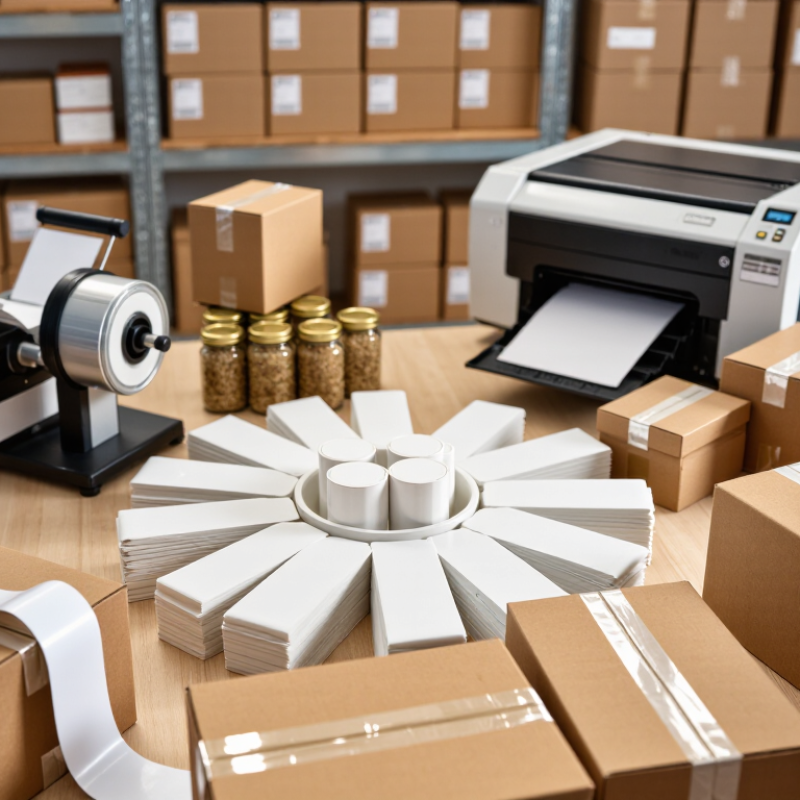
Adhesive label sheets are flat sheets carrying several pressure-sensitive labels. They combine a printable face stock, adhesive layer, and release liner. Each label stays attached until the liner is peeled away. The release liner protects the adhesive during storage and transport. When pressed onto a clean surface, the adhesive flows into tiny surface gaps. This creates a firm bond without water, heat, or extra glue. Simple, but precise.
Wholesale buyers should examine sheet size, label dimensions, material, and adhesive strength. Paper faces suit cartons, folders, and routine inventory marking. Synthetic faces resist moisture and rough handling more effectively. Permanent adhesive supports long-term placement, while removable adhesive allows cleaner repositioning. The right choice depends on the surface, storage conditions, and expected handling. A strong label can still fail on dusty cardboard.
In practical purchasing, test samples before ordering large quantities. Print a few sheets using the intended printer and check feeding, ink absorption, and edge alignment. Then apply labels to cartons, plastic containers, or glass surfaces. Leave them for several days. Watch for curling, lifting corners, smearing, or difficult removal. I have seen attractive sheets perform poorly after cold storage. Temperature matters more than many buyers expect.
Sheet packaging also affects warehouse efficiency. Flat, protected packs reduce bending and moisture exposure. Consistent cutting helps automatic or manual peeling. Some suppliers provide custom layouts, but unusual spacing may increase waste. A cheaper sheet is not always cheaper overall. Track rejected labels and application time before judging value.

For wholesale buyers, adhesive label sheets begin with the right face material. Paper offers a smooth writing surface and economical bulk pricing. It suits cartons, folders, jars, and short-term storage. Polypropylene handles moisture better and keeps its shape during daily handling. Polyethylene is softer and more flexible on curved containers. Polyester provides stronger resistance to abrasion, heat, and many cleaning conditions.
The adhesive matters just as much. Permanent adhesive supports long-term application, while removable adhesive helps protect temporary labels and smooth surfaces. For cold storage, choose an adhesive tested on chilled or frozen packaging. A strong adhesive can still fail on dusty, oily, or uneven surfaces. That detail is often missed. Always request samples before placing a large order.
A reliable sheet should feed evenly through printers, separate cleanly from its liner, and resist edge lifting. Matte coatings reduce glare during scanning and handwriting. Gloss coatings create sharper color, but fingerprints may show more easily. Sheet size, label spacing, corner shape, and packaging consistency also affect production speed. In my purchasing checks, I compare adhesive performance after 24 and 72 hours. I also inspect stacked cartons for curled corners. No material is perfect. A cheaper paper sheet may become expensive when rework, waste, and customer complaints appear.
Wholesale label selection starts with the application, not the lowest carton price. Measure the package’s usable panel, leaving at least 3 millimeters from edges, seams, and corners. Standard sheets often support common office sizes, while custom layouts reduce waste for unusual containers. Square labels suit flat boxes. Rounded corners resist lifting better on curved surfaces.
Compare shapes against application speed. Rectangles usually run efficiently through sheet-fed equipment, but circles can create larger gaps between labels. That gap becomes hidden material cost.
Smithers’ 2024 global labels outlook identifies pressure-sensitive formats as a major growth area, driven by flexible packaging and short production runs. This supports practical testing before wholesale commitment.
Finish changes both appearance and performance. Gloss improves color contrast, while matte reduces glare under retail lighting. Uncoated surfaces feel natural but may absorb ink unevenly.
FINAT’s 2024 Radar reported a 2.1% decline in European self-adhesive label demand during 2023, reminding buyers to control waste carefully. Ask for samples on the actual substrate. Test refrigerated cartons, dusty boxes, and stacked sheets.
I still see buyers choosing the smoothest finish without checking scanner readability. That mistake is easy to repeat.
Wholesale buyers should judge adhesive label sheets beyond the unit price. FINAT’s 2024 Radar reported a 4.7% rise in European self-adhesive label demand during 2023. That growth increases pressure on supply, consistency, and delivery schedules. Inspect the face stock, liner thickness, sheet flatness, and adhesive coating before approving a large order. A practical test is simple: apply labels to glass, corrugated board, and textured plastic. Check edge lift after 24 hours. Check ink clarity after rubbing. Small defects become expensive returns.
Cost needs a wider calculation. Include waste, packaging, freight, storage, and application speed. A cheaper sheet may curl in humid rooms or jam manual feeders. Smithers’ industry analysis continues to identify digital label production as a key route for shorter, customized runs. Buyers should request samples with variable data, color blocks, and fine text. Ask for adhesive technical data, production tolerances, batch identification, and quality inspection records. Custom sizes, corner shapes, perforations, and removable adhesives can improve usability, but each change may raise tooling or minimum-order costs. Confirm whether future reorders retain the same material and adhesive performance. This is often overlooked. I would also reserve a small percentage for pilot testing, because laboratory results may not match warehouse conditions.
2026 Best Adhesive Label Sheets for Wholesale Buyers
How to Select Reliable Adhesive Label Sheet Suppliers in 2026
Reliable sourcing starts with performance, not a polished catalog. Adhesive label sheets must feed smoothly, resist edge lifting, and print consistently across full cartons. The 2024 FINAT Radar reported a 2.7% decline in European self-adhesive label demand during 2023. This pressure makes supplier stability more important for wholesale buyers. A low quotation may hide inconsistent coating, poor packing, or delayed replenishment.
Ask suppliers for recent batch records, adhesive specifications, and material traceability. Request samples from at least two production lots. Test them on your actual printers, storage boxes, and shipping temperatures. Check sheet flatness after opening a sealed carton. Also inspect whether corners curl after 24 hours. Smithers’ 2024 analysis of the global labels market highlights continued demand for efficient, digitally compatible label production. That makes printer compatibility a purchasing requirement, not a minor detail. I would not rely on one successful sample. That mistake is easy to make.
Tips: Compare failure rates, not only unit prices. Confirm minimum order quantities, lead times, replacement terms, and moisture-resistant packaging. Ask for written quality tolerances. A supplier should explain them clearly. Keep a retained sample from every shipment. It helps when problems appear later. Certifications can support trust, but they do not replace your own testing. One overlooked detail? Evaluate communication speed before placing a large order. Slow replies may become costly after production begins.
| Selection Dimension | Recommended Specification or Benchmark | Wholesale Buyer Data Point | Supplier Verification Method | Why It Matters |
|---|---|---|---|---|
| Sheet Format | A4: 210 × 297 mm; Letter: 8.5 × 11 in | Choose the format used by the target market and printing equipment. | Request a technical drawing and confirm sheet dimensions with calipers or a certified sample. | Incorrect dimensions can cause printer-feed problems, template misalignment, and material waste. |
| Label Layout | Common layouts range from 1 to 40 or more labels per sheet, depending on label size. | Confirm label width, height, corner radius, margins, and horizontal and vertical gaps. | Check a printable dieline or template file before approving production. | Accurate layout data is essential for barcode placement, address printing, and automated workflows. |
| Face Material | Uncoated paper for general office use; coated paper for sharper color; synthetic film for moisture resistance. | Match the face material to the required print quality, handling conditions, and product surface. | Review the material specification sheet and conduct print and rub-resistance tests. | The face material affects image quality, durability, handwriting performance, and overall cost. |
| Adhesive Type | Permanent adhesive for long-term attachment; removable adhesive for temporary applications. | Specify whether labels must be repositionable, removable without residue, or permanently bonded. | Request adhesive identification, application guidance, and samples on the intended substrate. | Adhesive selection determines bonding strength, removability, residue, and customer satisfaction. |
| Substrate Compatibility | Adhesive performance varies on paperboard, corrugated board, glass, plastic, metal, and painted surfaces. | Test on every major surface used by the end customer. | Apply samples to representative surfaces and inspect initial tack and bond after 24 to 72 hours. | A label that performs well on paper may fail on low-energy plastics, textured surfaces, or curved containers. |
| Temperature Range | Confirm minimum application temperature and service temperature from the adhesive specification. | Record actual storage, application, transport, and use temperatures. | Request documented temperature limits and perform cold and warm conditioning tests when required. | Temperature can significantly affect tack, curing, shrinkage, edge lifting, and long-term adhesion. |
| Printer Compatibility | Identify suitability for laser, inkjet, copier, or offset printing; do not assume universal compatibility. | Match the sheet to the buyer’s printer type, fuser temperature, ink system, and feed path. | Run a full-sheet test for feeding, toner or ink adhesion, smearing, and curl. | Printer-specific testing reduces jams, image defects, adhesive transfer, and equipment contamination. |
| Barcode and Variable Data Performance | Use a smooth, printable face with consistent opacity and dimensional stability. | Verify barcode contrast, edge definition, scanning reliability, and variable-data readability. | Print production files and scan samples using the customer’s intended barcode system. | Unreadable barcodes can disrupt inventory, shipping, retail, and asset-tracking operations. |
| Release Liner Quality | Liner should be flat, clean, and sufficiently stable for sheet feeding and die-cutting. | Check liner caliper, curl, release consistency, and ease of label removal. | Inspect samples for adhesive ooze, liner cracking, label lift, and inconsistent release force. | Release-liner defects can lead to jams, label peeling, waste, and poor user experience. |
| Die-Cut Accuracy | Cut depth should separate the label from the liner without cutting through or weakening the liner. | Set an acceptable tolerance for label dimensions, gaps, and corner alignment. | Measure samples from multiple cartons and inspect the liner on both sides of the sheet. | Consistent die-cutting supports reliable peeling, accurate printing, and efficient packaging. |
| Moisture and Abrasion Resistance | Paper is suitable for dry environments; film or protective coatings are better for moisture and abrasion exposure. | Define expected exposure to water, condensation, oils, chemicals, and frequent handling. | Perform water-drop, rub, humidity, and application-specific chemical tests. | Environmental resistance helps prevent fading, smearing, peeling, and loss of essential information. |
| Packaging and Carton Protection | Sheets should remain flat and protected from dust, humidity, pressure, and edge damage. | Confirm sheets per pack, packs per carton, carton dimensions, gross weight, and pallet configuration. | Review packaging drawings and inspect cartons after a simulated transport or stacking test. | Proper packaging reduces curled sheets, damaged corners, contamination, and warehouse handling losses. |
| Quality-Control Documentation | Batch records should cover dimensions, material, adhesive, printability, and visual inspection. | Require a lot number, inspection date, specification revision, and certificate of conformity where applicable. | Ask for a sample inspection report and verify that retained samples are traceable to each lot. | Traceability makes complaints, corrective actions, and repeat purchasing more manageable. |
| Order Flexibility | Evaluate standard sizes separately from custom sizes, custom packaging, and private-label requirements. | Compare minimum order quantity, lead time, sample policy, and repeat-order terms. | Request a written quotation showing tooling, setup, sampling, production, and delivery timelines. | Clear commercial terms help control inventory, cash flow, and launch schedules. |
| Supplier Reliability | Look for documented processes, stable specifications, responsive communication, and consistent delivery performance. | Track on-time delivery rate, defect rate, response time, and corrective-action completion. | Use a sample order, reference checks, quality agreement, and periodic supplier review. | Reliable suppliers reduce stockouts, emergency freight, customer claims, and specification drift. |