How to Choose the Best Thermal Papers for Your Printing Needs
Choosing the right thermal papers for your printing needs is crucial. Experts emphasize the significance of understanding your requirements. John Smith, a thermal paper specialist at Print Solutions Inc., once stated, “Selecting the right thermal paper can make a difference in clarity and durability.”
Thermal papers are not all created equal. Factors such as thickness, coating, and size matter significantly. For instance, thicker papers often provide sharper prints but may not fit all printers. Choosing the wrong type can lead to frustrating printing issues.
Additionally, consider the intended use of your prints. Are they for receipts, labels, or tickets? Each application demands different qualities from thermal papers. Be aware of your printer’s compatibility. Some printers may jam if the paper is too thick or not designed for thermal printing. Exploring options can be overwhelming, but it pays off in the long run.
Factors to Consider When Choosing Thermal Paper Types
Choosing the right thermal paper can impact your printing quality. There are several factors to consider. First, the type of thermal printing you use matters. Direct thermal and thermal transfer methods require different paper properties. Knowing your printer type is crucial.
Another important factor is the paper weight. Heavier papers tend to provide better durability but may not be necessary for all applications. Consider where you will use the prints. Will they be outdoors or exposed to heat? This can affect your choice significantly. Additionally, look at the paper coating. A smoother surface may enhance print quality but might not be suitable for all printers.
Finally, environmental considerations are on the rise. Some thermal papers are now made with eco-friendly materials. This option can be beneficial for businesses aiming to reduce their carbon footprint. Reflect on your needs carefully. What works best for one situation might fail in another. Choosing wisely requires balancing quality, application, and environmental impact.
Understanding Different Thermal Paper Grades and Qualities
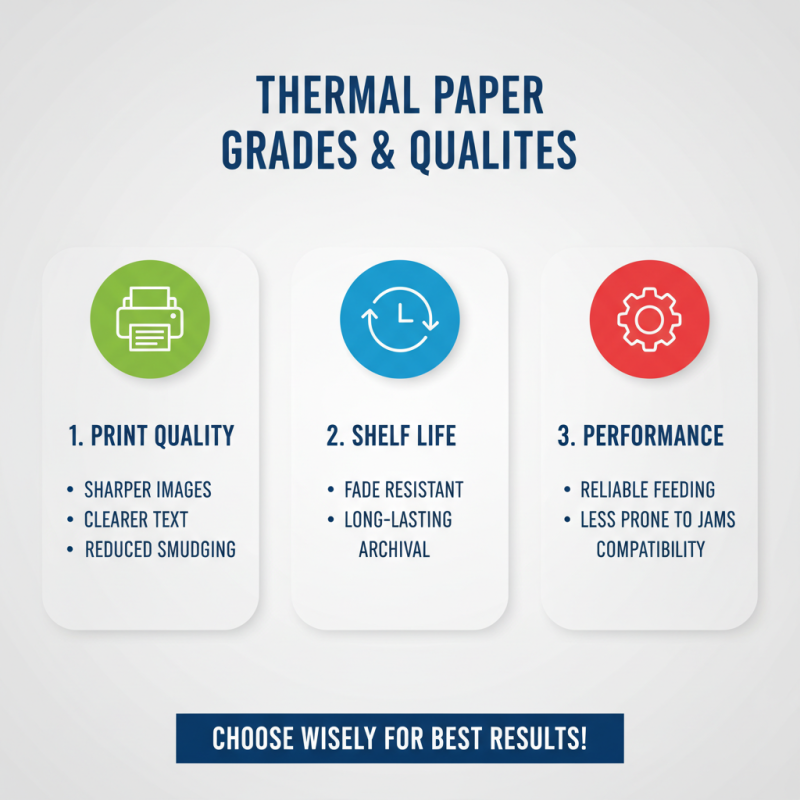
When selecting thermal paper, understanding the various grades and qualities is crucial. Different thermal papers can affect print quality, shelf life, and performance. High-quality thermal papers often yield sharper images and clearer text. They are less prone to fading, which is vital for receipts and important documents.
Choosing the right grade of thermal paper can be challenging. Cheaper papers may seem appealing, but they might not last long. Low-grade options can lead to smudging or illegible prints. It’s important to consider what you are printing and how long durability is required.
Tips: Always test the papers before bulk purchases. Ask for samples if possible. Check for the weight and thickness. Thicker papers often provide better prints. Look for papers with a longer shelf life, especially for important documents. If unsure, consult with a professional to avoid costly mistakes.
Evaluating Print Quality and Performance for Your Needs
Choosing the right thermal paper is essential for achieving optimal print quality. The print clarity and durability influence how well the output serves your needs. When evaluating, consider the paper's coating and surface texture. A smoother surface typically results in sharper images. However, rougher textures may absorb ink differently, impacting print quality.
Tips: Always test samples before making a large purchase. This ensures the selected paper meets your specific requirements. Assess the print quality under various conditions, such as different temperatures and humidities. Some papers react poorly to moisture, leading to blurred prints.
Another critical factor is the paper's sensitivity to heat. Different thermal papers have varying heat thresholds. This can affect how quickly the ink dries and how vibrant the colors appear. Some users discover that their chosen paper smudges easily, which can be frustrating in professional settings.
Tips: Keep in mind the long-term effects of your choice. Over time, poor quality paper may lead to unnecessary costs. Ensure the thermal paper is compatible with your printer. Compatibility issues can lead to more wasted prints. While it's tempting to choose the cheapest option, it may not always yield the best results.
Determining the Right Size and Format for Your Printer
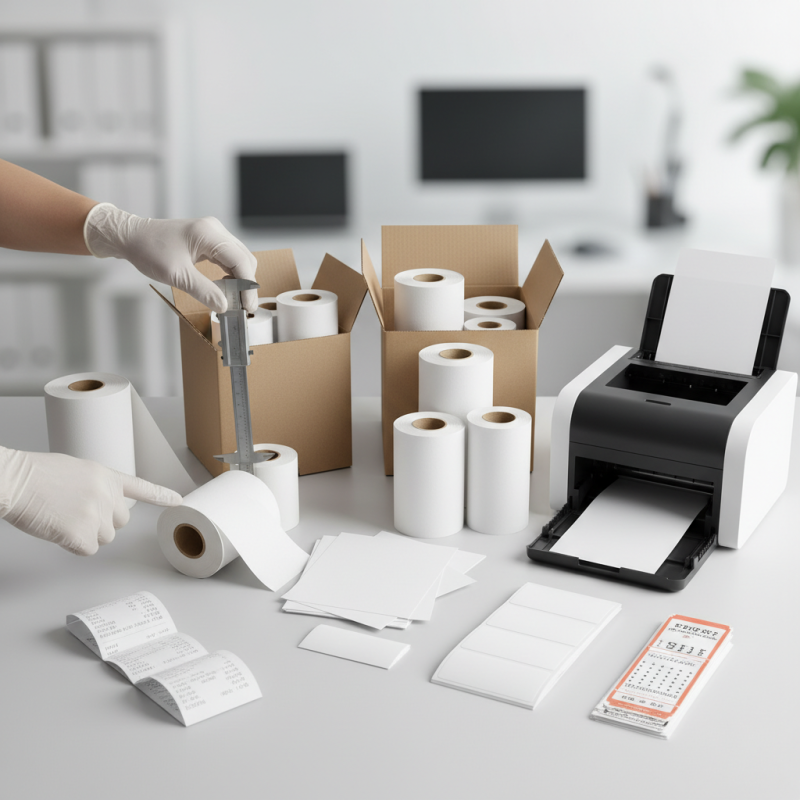
When selecting thermal paper, size and format play crucial roles. It's not just about picking any paper; your printer requires specific dimensions. Common sizes include 2¼", 3", or 4" widths. You should measure your printer's input slot to ensure a snug fit. An improper size can lead to jams. This simple oversight can disrupt your workflow.
Beyond size, consider the format: single rolls or multipacks. Single rolls are convenient for limited use, while multipacks cater to bulk printing. If you print receipts or labels regularly, a larger format saves time and reduces replacement frequency. Assess your printing habits carefully. It's essential to find what best suits your needs.
Remember, thermal paper also varies in quality. Not all papers offer the same durability or print clarity. Inferior quality may fade faster, leading to data loss over time. Pay attention to these details, as they impact your prints' longevity. Reflect on your past choices. Were they driven by convenience or quality? This insight can guide future decisions.
How to Choose the Best Thermal Papers for Your Printing Needs - Determining the Right Size and Format for Your Printer
| Paper Type |
Width (mm) |
Length (m) |
Thickness (microns) |
Finishing |
| Thermal Paper |
80 |
80 |
55 |
Coated |
| POS Paper |
57 |
60 |
48 |
Smooth |
| Cash Register Paper |
76 |
80 |
55 |
Matte |
| Printer Paper |
44 |
70 |
50 |
Glossy |
| Label Paper |
100 |
100 |
60 |
Water-resistant |
Comparing Cost-Effectiveness and Environmental Impact of Options
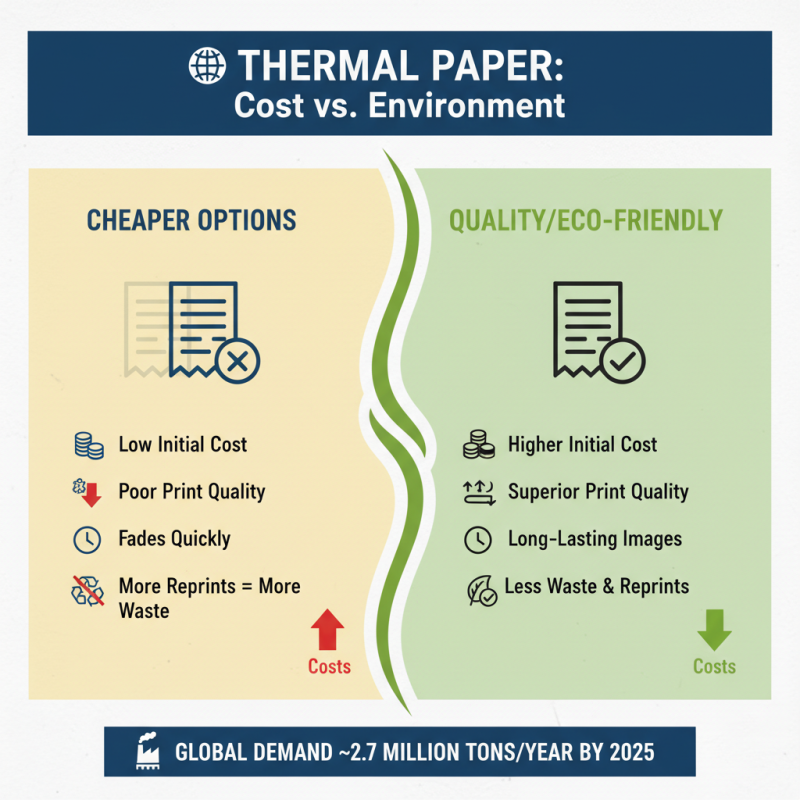
When selecting thermal paper, cost-effectiveness and environmental impact are crucial factors. The global demand for thermal paper is projected to reach approximately 2.7 million tons annually by 2025. Cheaper options may seem tempting, yet they often compromise quality. Lower-grade thermal papers can fade quickly, leading to reprints and higher costs in the long run.
Environmental considerations are increasingly important. Traditional thermal papers often contain harmful chemicals like bisphenol A (BPA). Studies indicate that over 90% of thermal papers may still use this compound, despite the growing demand for safer alternatives. Biodegradable and BPA-free options are available, but they tend to be pricier. Balancing your budget with these eco-friendly choices requires careful evaluation.
Research shows that investing in higher-quality, sustainable thermal papers can enhance long-term savings. Companies might notice reduced waste and improved efficiency. The initial higher cost can lead to less frequent reprinting. Ultimately, the choice of thermal paper is about aligning financial viability with responsible environmental practices.





 Phone
Phone Send Email