Why Choose Label Sheets for Your Business Needs?
In today's fast-paced business environment, the choice of labeling solutions can significantly impact efficiency and branding. "Label Sheets are essential tools for simplifying the logistics of any business," says John Merritt, a renowned expert in the labeling industry. His insights underscore the necessity of using high-quality label sheets, which can cater to diverse labeling needs.
Label sheets offer versatility, enabling businesses to create customized labels quickly. Whether it's for packaging, inventory management, or marketing, these sheets allow for personalization that can strengthen brand identity. The ability to print in-house saves time and offers control over the label design process. However, some companies may overlook the importance of this resource, leading to wasted materials and confusion in their labeling system.
Balancing cost and quality is crucial. Investing in the right label sheets can prevent errors that compromise branding efforts. While cheaper options are available, they may not deliver the same results in durability and professional appearance. As businesses grow, reevaluating labeling strategies becomes necessary to maintain efficiency and meet customer expectations. Prioritizing quality in label sheets will serve as a foundational step toward achieving long-term success.

Understanding Label Sheets: An Overview of Their Utility
Label sheets offer a customizable solution that meets diverse business needs. Their flexibility makes them an ideal choice for various applications, from product labeling to internal organization. According to a recent industry report, more than
60% of businesses leverage labels to enhance branding and streamline operations. This highlights the significance of incorporating effective labeling in business strategies.
Using label sheets can improve efficiency and accuracy in product identification. A study revealed that accurate labeling can reduce errors by nearly
40%. This not only saves time but also minimizes costly mistakes. Many companies find that using label sheets boosts customer satisfaction, as clear and professional labels enhance product appeal.
Tips: Choose the right material for your labels. Different environments require different durability levels. Ensure your labels are resistant to water and abrasion to maintain their integrity. Remember that design matters, too. A well-designed label communicates information quickly.
In practice, businesses often struggle with label design and print quality. Investing in
quality equipment or professional services may yield better results. This can lead to more effective communication with customers and improved product presentation.
Types of Label Sheets and Their Specific Business Applications
When selecting label sheets for your business, consider their specific applications. There are various types of label sheets available. Each type serves distinct needs—shipping labels, product labels, and promotional labels. According to a report by Smithers Pira, the global label market is predicted to grow by 4% annually. This growth reflects the increasing reliance on labels for branding and information dissemination.
Shipping labels are essential for logistics. They help streamline the distribution process. Product labels enhance retail appeal. They communicate vital information to consumers, including ingredients and usage. A study from the Label Industry Global Forecasts suggests that the retail label sector will reach a value of $40 billion by 2025. Promotional labels are useful for marketing campaigns and special offers. They attract customer attention and drive sales.
Tips: Choose the right type of label based on your business needs. Ensure the label material aligns with your product. For example, waterproof labels are ideal for beverages. Regularly evaluate your label strategy. Reflect on customer feedback and sales data to refine your approach.
Cost-Effectiveness of Label Sheets for Small and Large Businesses
Label sheets have gained immense popularity among businesses of all sizes. They offer a cost-effective solution for various labeling needs. According to a report by the Pressure-Sensitive Tape Council, the labeling industry is expected to reach $50 billion by 2024. This growth highlights the increasing reliance on efficient labeling methods, making label sheets a viable option.
For small businesses, the initial investment in label sheets can lead to substantial savings. A study by the National Association of Manufacturers showed that 76% of small manufacturers reported lower operational costs after implementing efficient labeling systems. Large businesses also stand to benefit. Automating labeling processes can reduce labor costs by up to 30%, providing a significant ROI.
Tips: Consider bulk purchasing to save costs. Online marketplaces often offer discounts for larger orders. Additionally, keep an eye on inventory levels to avoid unnecessary reorders.
Cheap labels can seem appealing but may compromise quality. Investing in quality label sheets can enhance your brand image. Make sure to choose materials that withstand environmental factors. Durability can prevent costly reprints and time lost on re-labeling.
Best Practices for Utilizing Label Sheets in Various Industries
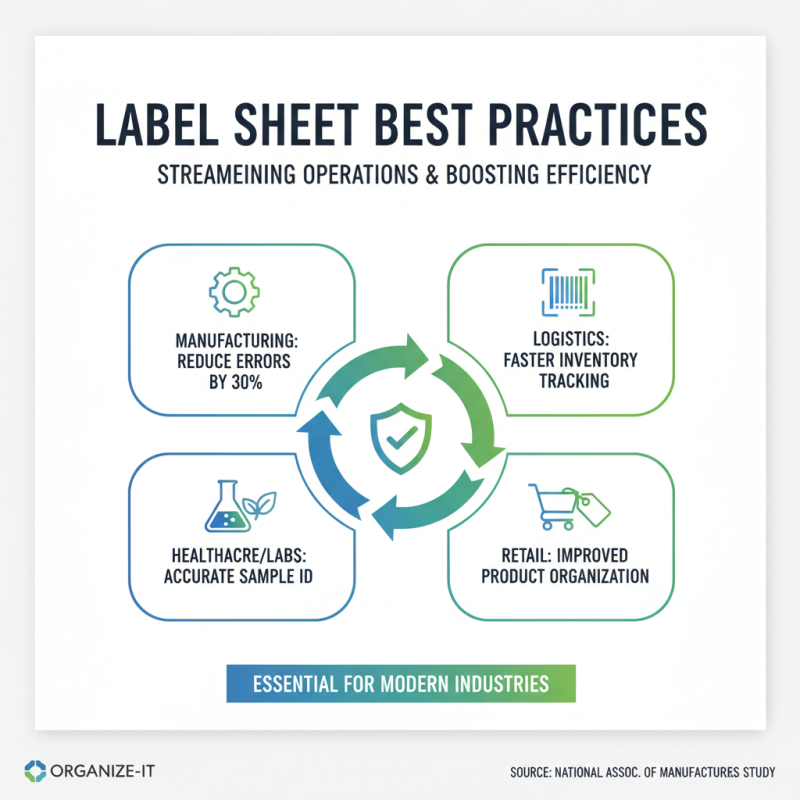
Label sheets are becoming essential for various industries. They streamline labeling processes and enhance organization. In manufacturing, for instance, precise labeling can reduce errors and improve efficiency. A study by the National Association of Manufacturers found that better labeling can cut mislabeling costs by up to 30%. This statistic underscores the importance of utilizing label sheets effectively.
In the retail sector, the impact of well-organized labels cannot be overlooked. According to recent reports, 60% of consumers prefer products with clear, informative labels. This preference highlights that investing in quality label sheets can boost sales. However, it's important to reflect on the challenges as well. Inadequate training on labeling systems can lead to poor implementation and wasted resources. Businesses must advocate for training to maximize the benefits of label sheets.
Healthcare environments also benefit from label sheets. Properly labeled medication can prevent serious errors. A report from the Institute of Medicine pointed out that medication mislabeling contributes to thousands of adverse events annually. Label sheets can greatly enhance safety in these critical applications. It’s crucial to recognize that while label sheets offer significant advantages, a one-size-fits-all approach doesn't work for every scenario. Tailoring solutions to specific needs can improve their effectiveness.
Future Trends: Innovations in Label Sheet Technology and Usage
The label sheet industry is undergoing significant transformations. Innovations are shaping the way businesses use labels. For instance, the integration of smart technology is a game-changer. These smart labels can now store data and track products. This capability enhances inventory management and helps reduce losses. As companies look to optimize operations, such technology becomes increasingly appealing.
Another trend is the rise of eco-friendly label materials. Consumers are more aware of environmental issues. Using sustainable materials can be a selling point for many businesses. Companies face the challenge of balancing cost with sustainability. The transition isn't always smooth, but it is necessary for modern branding.
In addition, customization options are expanding. Businesses can create labels to meet specific needs. Using variable data printing allows for personalized messages on each label. However, this requires investment and technology upgrades. Many companies hesitate before taking this leap. The potential for improved customer engagement is a strong motivator. Embracing these innovations can lead to better efficiency and customer loyalty.





 Phone
Phone Send Email