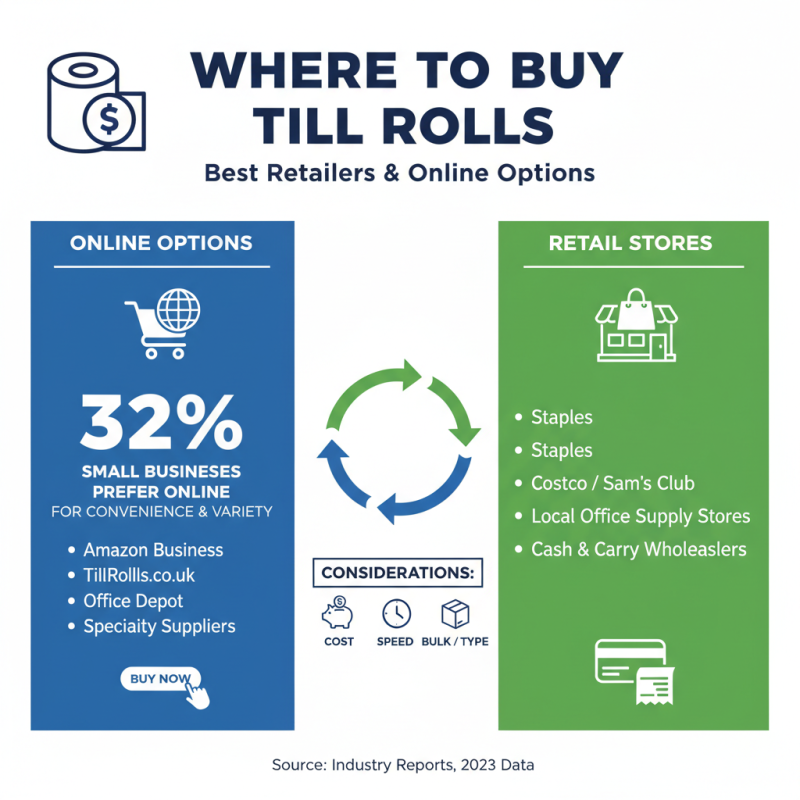
2026 Best Till Rolls for Your Business Needs and Budget?
In the fast-paced world of retail, choosing the right till rolls is crucial for maintaining efficiency and customer satisfaction. Till rolls play a vital role in transactions, ensuring that receipts are printed smoothly. Businesses must consider their specific needs and budget when selecting the best products.
With various options available, it can be overwhelming. Some rolls are more advanced, while others are simpler and budget-friendly. It's essential to weigh the benefits of quality against cost. While cheaper rolls save money upfront, they may lead to issues later. Frayed edges or ink problems can frustrate both employees and customers.
Investing in reliable till rolls can improve transactions significantly. They contribute to a more professional appearance and enhance customer trust. Balancing quality with budget is key. Ultimately, the right choice can make a difference in operations and customer satisfaction.
Overview of Till Rolls and Their Importance for Businesses
Till rolls are essential for many businesses. They play a crucial role in day-to-day operations. These rolls enable transactions, contributing to smooth customer experiences. The right till roll affects both efficiency and professionalism. A poor choice can lead to frustrating delays.
Choosing the right roll can be challenging. There are different types available, including thermal and bond rolls. Each type has its own benefits and drawbacks. Consider the volume of sales when selecting. If you have high sales, opt for bulk purchases. This can save money in the long run.
Here are some tips: Check compatibility with your register. Not all rolls fit every model. Consider your printing needs too. Some businesses prefer rolls with logos. This can enhance brand visibility. Regularly assess your stock. It’s easy to run low during busy periods. Having a reliable supply can prevent disruptions.
Types of Till Rolls Available for Different Business Needs
When choosing till rolls for your business, understanding the types available is crucial. There are mainly two types: thermal and traditional. Thermal rolls use heat to print, while traditional rolls require ink. A report shows that thermal rolls are growing in popularity, making up 70% of the market. Many businesses prefer them for their speed and low maintenance.
Different businesses have unique needs. Retailers benefit from shorter rolls due to storage limitations. Restaurants often need longer rolls for receipts. A survey found that 64% of restaurants prioritize quick printing speed. Yet, some establishments still favor traditional rolls for their reliability. This highlights a critical market gap. Adaptability is essential as the market evolves.
Quality matters. Low-cost options may save money initially, but can lead to higher long-term costs. For example, poor-quality rolls can jam printers or fade rapidly. This compromises customer experience. Investing in quality, even at a higher price, can enhance efficiency. Balancing cost and quality remains a challenge that many businesses face.
2026 Best Till Rolls for Your Business Needs and Budget
| Type of Till Roll |
Material |
Size (mm) |
Length (m) |
Average Price ($) |
| Thermal Till Rolls |
Thermal Paper |
80 |
40 |
25 |
| Old-School Paper Rolls |
Standard Paper |
76 |
45 |
28 |
| Eco-Friendly Roll |
Recycled Paper |
80 |
50 |
30 |
| POS Rolls |
Thermal Paper |
57 |
30 |
22 |
| Multi-Purpose Roll |
Carbonless Paper |
80 |
100 |
40 |
Factors to Consider When Choosing Till Rolls for Your Budget
When choosing till rolls for your business, it's crucial to think about various factors. One key consideration is the size of the rolls. Different machines require specific dimensions. Ensure that the rolls fit your point-of-sale system properly. An incorrect size can lead to wasted time and frustration during busy hours.
Another important factor is the paper quality. Higher quality paper reduces jamming and improves printing clarity. Think about how often you print. If you process a high volume of transactions, investing in better paper may save money in the long run. Also, consider the thermal quality if your printer uses thermal rolls. These might be more cost-effective but can sometimes fade quickly.
Lastly, pricing plays a vital role in the decision-making process. Compare costs across suppliers. Sometimes, opting for lower priced rolls may seem logical, but be wary of quality. Lower quality can increase the costs due to replacements. Remember, a well-informed choice should balance quality and budget. Taking the time to review these factors can lead to better outcomes for your business operations.
Top Brands and Models of Till Rolls for 2026
When selecting till rolls for your business in 2026, various factors come into play. Different models cater to specific needs. The paper’s quality can affect print clarity. If a roll jams, it costs time and money. So, consider the type of transactions and equipment you use. It’s not always easy to choose.
Brands often highlight features. Look for rolls that guarantee durability. Some have thermal sensitivity for better prints. But remember, not every roll will fit every machine. Compatibility is crucial. Each business may have unique requirements. Evaluate the price as well, as cheaper options do not always mean better value.
Tips: Always check the roll size before purchasing. Measure your printer's specifications to avoid frustration. Keep extra rolls handy for busy seasons. It’s wise to test a small batch first. You want to ensure they perform well. Don’t overlook reviews; they often reveal hidden issues. Reflect on your experience to make smarter choices in the future.
2026 Best Till Rolls for Your Business Needs and Budget






 Phone
Phone Send Email